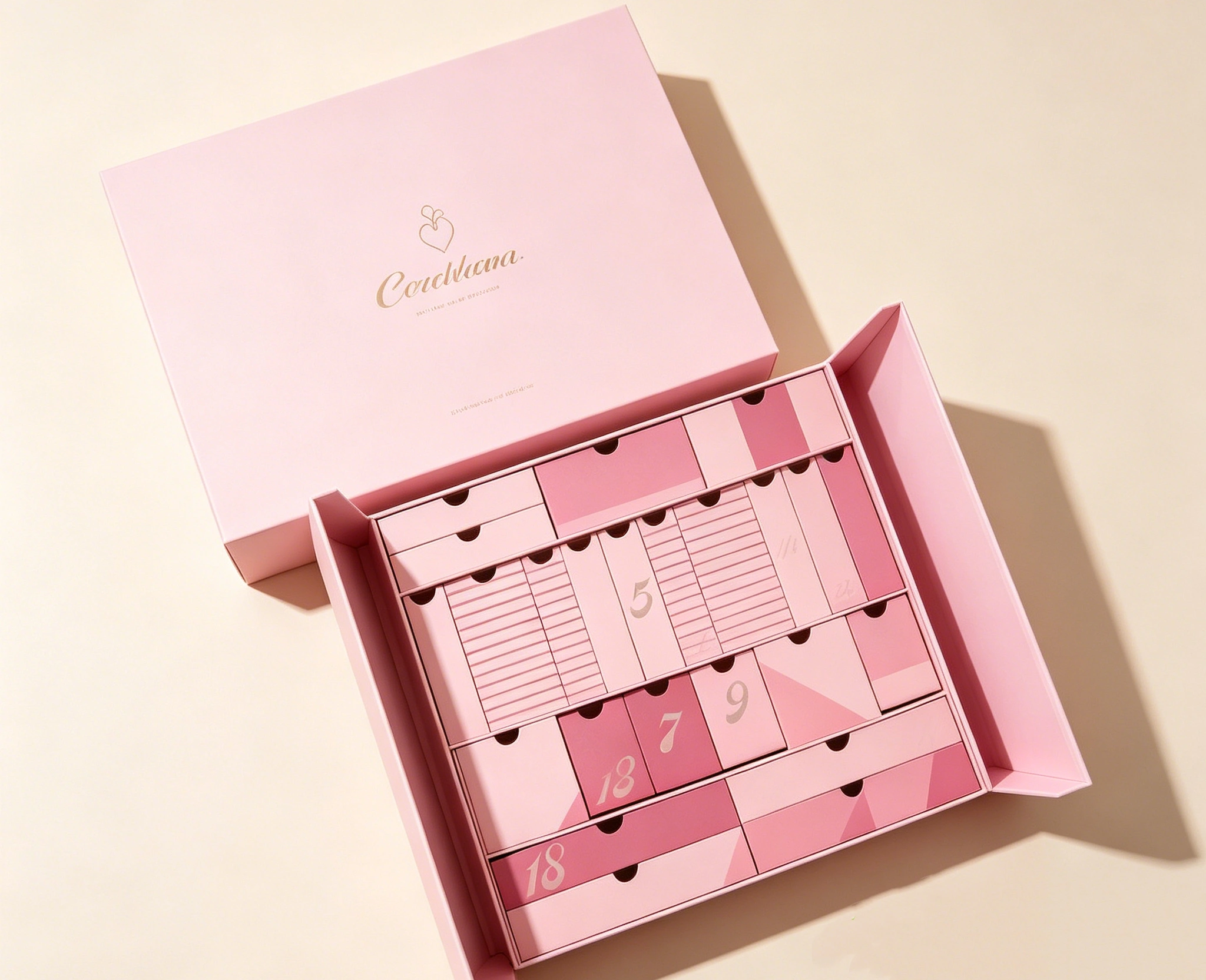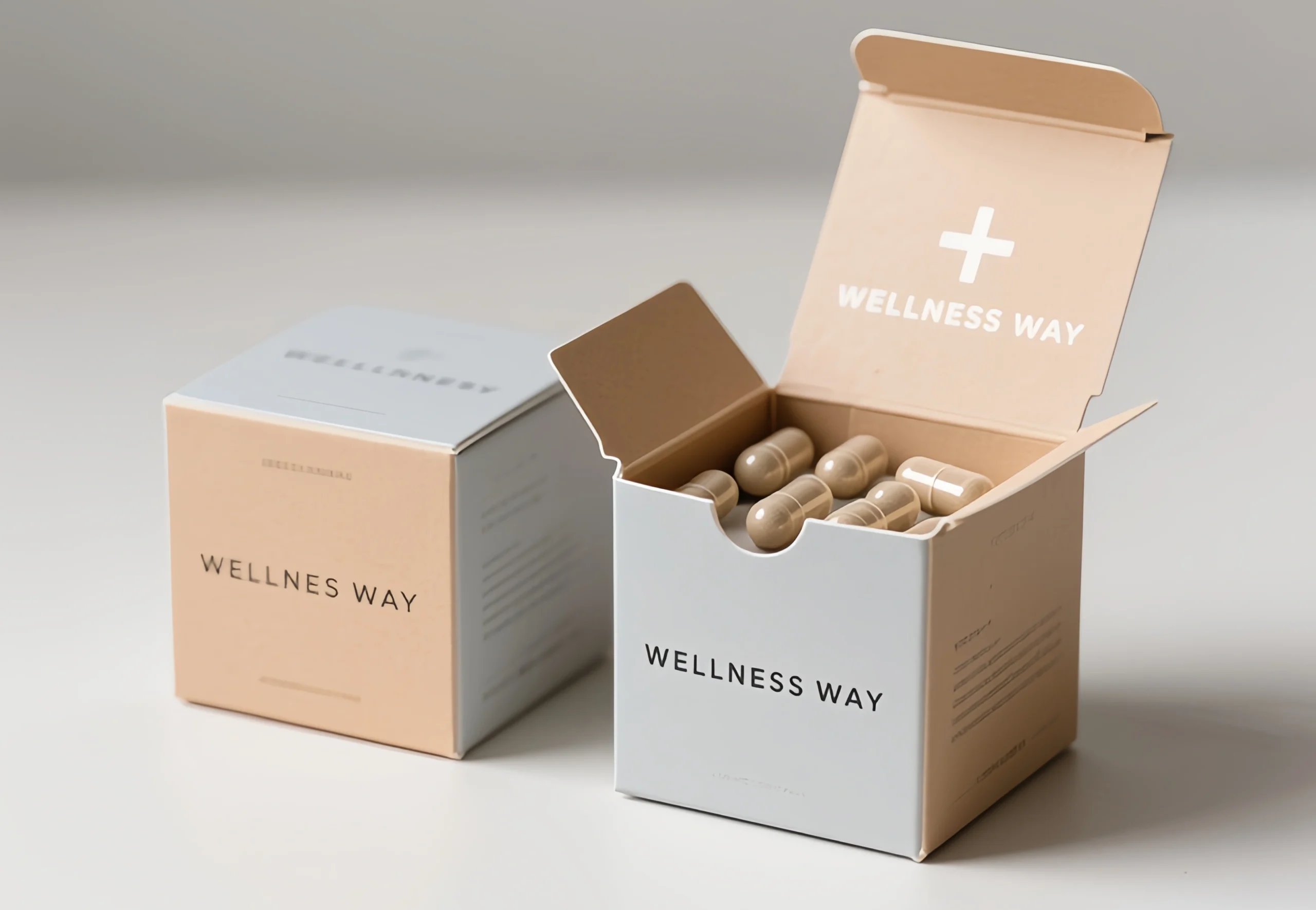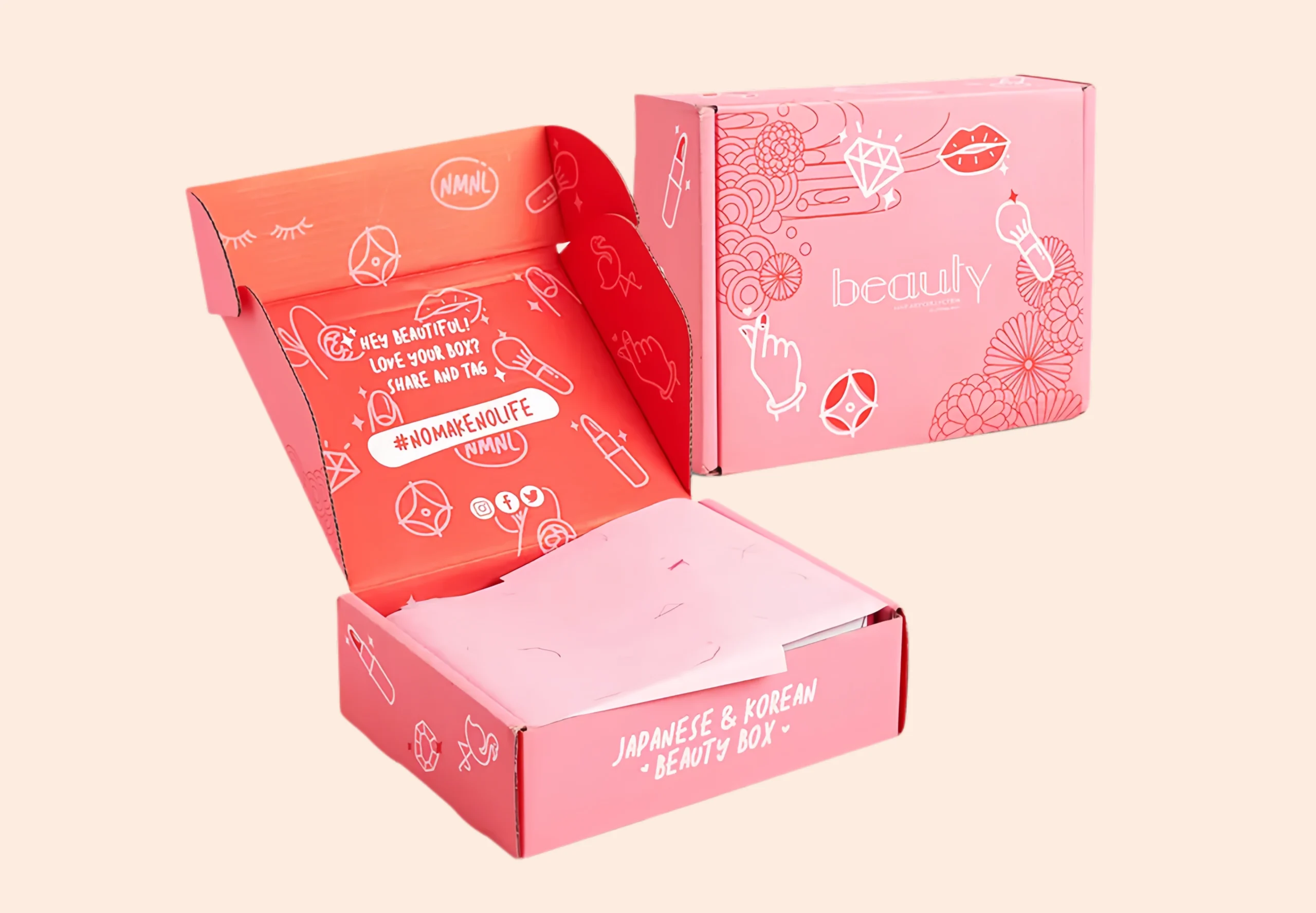
Choosing the right packaging material is an important decision for any product-based business. The material you select affects product protection, shipping costs, packaging appearance, sustainability, and the overall customer experience.There is no single packaging material that works for every product. A lightweight clothing item may need a very different solution from a fragile cosmetic product, a heavy retail item, or a luxury gift.
The right choice depends on several factors, including product weight, fragility, size, shipping conditions, budget, brand positioning, and sustainability goals.This guide explains how to evaluate packaging materials and choose the most suitable option for your product.
If you want to understand the basic properties of different packaging materials first, see our Packaging Materials 101 guide.
What Should You Consider When Choosing Packaging Materials?
Before choosing a material, start with your product and shipping requirements rather than the appearance of the packaging alone.
The following factors can help you narrow down the right option.
1. Product Weight
The weight of your product is one of the first things to consider.Lightweight products can often use paperboard cartons, kraft paper packaging, or other lightweight paper-based solutions. Heavier products generally require stronger structures, such as corrugated cardboard or rigid board, depending on how the product will be transported and presented.The goal is not to choose the thickest material available. Instead, choose a material that provides sufficient strength without adding unnecessary weight and cost.
2. Product Fragility
Fragile products require more than a strong outer package.Glass bottles, electronics, ceramics, jewelry, and other delicate products may need a combination of structural packaging and internal protection.
For example, a corrugated shipping box can be combined with:
- Paper-based cushioning
- Custom paper inserts
- Molded pulp inserts
- Dividers
- Protective sleeves
For premium products, a rigid box with a custom insert can provide both structural support and a high-quality presentation.
3. Product Size and Shape
Packaging should fit the product as closely as practical.A package that is significantly larger than the product wastes material and increases shipping volume. A package that is too tight may provide insufficient protection or make the product difficult to pack.Irregularly shaped products may require custom inserts or structural designs to prevent movement during transportation.For e-commerce businesses, this is particularly important because package dimensions can affect dimensional weight and shipping costs.
4. Shipping and Handling Conditions
Think about how your packaging will be handled before it reaches the customer.A product shipped locally may experience fewer handling stages than one shipped internationally. E-commerce packages can pass through warehouses, fulfillment centers, sorting facilities, delivery vehicles, and multiple handling points.
For long-distance or international shipping, packaging should generally provide stronger resistance to:
- Compression
- Impact
- Vibration
- Moisture
- Repeated handling
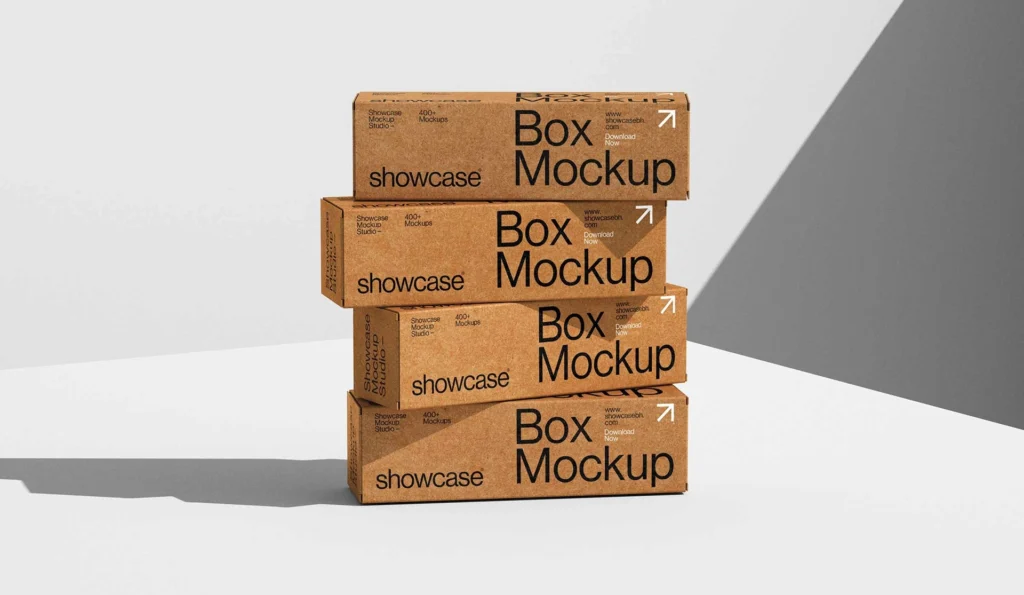
Corrugated cardboard is often a practical choice for products that require strong shipping protection.
5. Brand Positioning
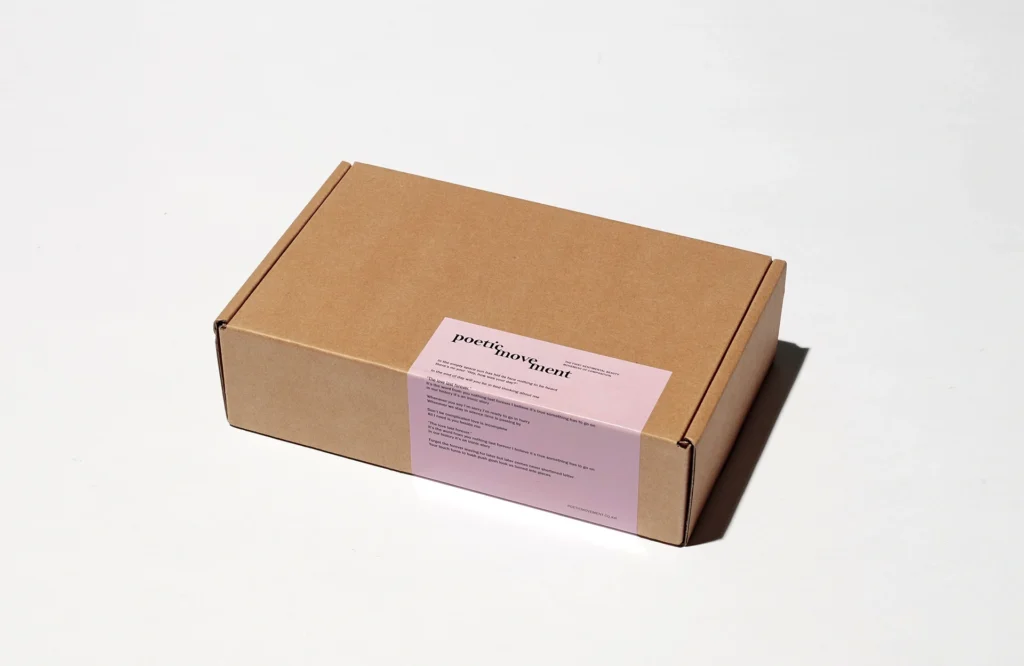
Packaging should also match the way customers perceive your brand.An eco-conscious brand may prefer kraft paper or recycled paper-based materials. A luxury brand may choose rigid board with premium paper wrapping and specialty finishes.
For example:
- Eco-friendly brands: Kraft paper and recycled paper materials
- Retail brands: White cardboard and folding cartons
- E-commerce brands: Corrugated boxes and mailer boxes
- Luxury brands: Grey board rigid boxes
- Premium gift brands: Rigid boxes with specialty finishes
The material itself becomes part of the brand experience.
6. Budget
Packaging cost is influenced by much more than the raw material.The total cost may include:
- Material
- Printing
- Lamination
- Foil stamping
- Embossing
- Structural components
- Inserts
- Assembly
- Shipping
A low-cost material is not always the most economical choice if it results in higher damage rates or expensive shipping.The better approach is to balance material cost, protection, appearance, and logistics efficiency.
7. Sustainability Requirements
Sustainability has become an increasingly important consideration for packaging buyers.Depending on your product and market, you may consider:
- Recyclable paper
- Recycled paperboard
- FSC-certified paper
- Kraft paper
- Plastic-free packaging
- Reusable packaging
However, sustainable packaging should still provide adequate product protection. Reducing material usage is not beneficial if it causes frequent product damage and replacement shipments.

Packaging Material Comparison
Different packaging materials offer different combinations of strength, appearance, cost, and flexibility.
| Packaging Material | Best For | Main Advantages | Considerations |
|---|---|---|---|
| Kraft Paper | Bags, wrapping, lightweight packaging | Lightweight, recyclable, natural appearance | Limited structural protection |
| Corrugated Cardboard | Shipping and e-commerce | Strong, lightweight, good protection | Less premium appearance |
| White Cardboard | Retail and folding cartons | Excellent printing and presentation | Less rigid than grey board |
| Grey Board | Luxury and gift boxes | Rigid, strong, premium feel | Higher material and production cost |
The best material depends on the specific requirements of your product rather than simply choosing the strongest option.
Main Types of Packaging Materials
Kraft Paper Packaging
Kraft paper is a strong and flexible paper material commonly used for shopping bags, wrapping, mailers, and lightweight packaging.Its natural appearance makes it particularly popular with brands that want a simple, organic, or eco-conscious visual identity. Kraft paper can also be printed with logos, graphics, and other brand elements.
Best for:
- Paper shopping bags
- Product wrapping
- Lightweight packaging
- Eco-focused brands
- Retail and promotional packaging
Advantages:
- Lightweight
- Flexible
- Recyclable
- Natural appearance
- Suitable for custom printing
Kraft paper is a good choice when appearance, flexibility, and material efficiency are important. However, products requiring significant structural protection may need corrugated cardboard or a rigid packaging structure instead.For a broader explanation of paper-based packaging materials, see our Packaging Materials 101 guide.
Corrugated Cardboard
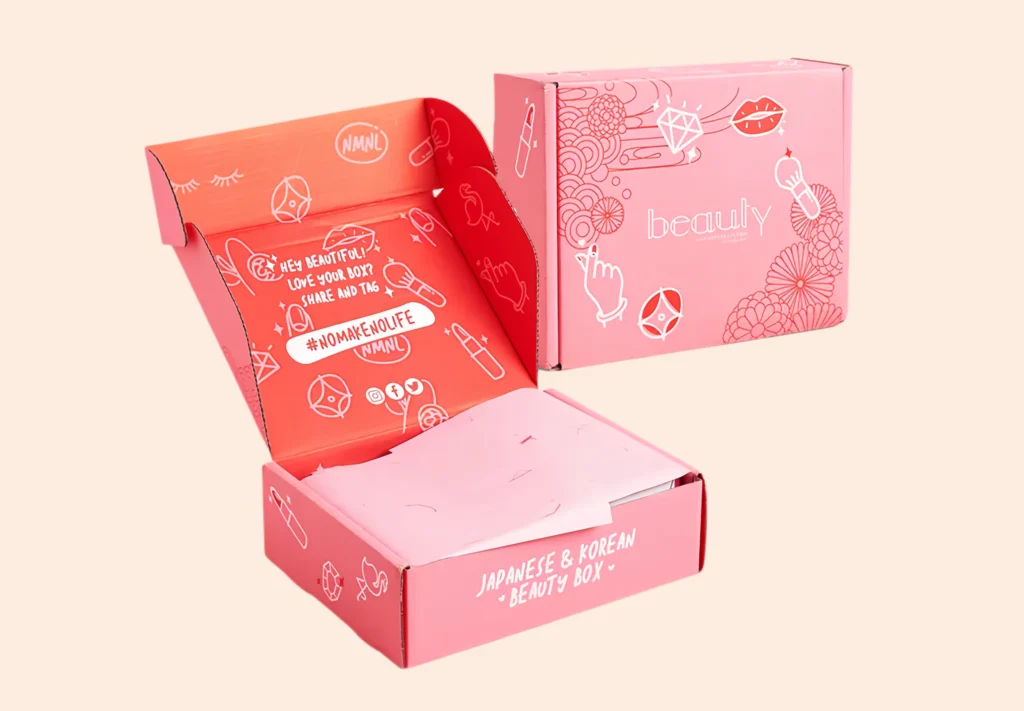
Corrugated cardboard is widely used for shipping and e-commerce packaging because it provides a strong balance between protection, weight, and cost.Its fluted inner layer helps improve cushioning and compression strength, making it suitable for products that need to withstand transportation and warehouse handling.
Best for:
- Shipping boxes
- E-commerce packaging
- Mailer boxes
- Product transportation
- Heavy or fragile products
Different flute profiles provide different performance characteristics. The appropriate structure should be selected according to product weight, dimensions, stacking requirements, and shipping conditions.For more information about corrugated packaging, see our guide to corrugated boxes, their types, uses, and advantages.
White Cardboard
White cardboard is commonly used for retail packaging and folding cartons where print quality and visual presentation are important.Its smooth surface provides a clean background for logos, product information, illustrations, and high-resolution graphics. It can also be combined with finishes such as matte lamination, glossy lamination, soft-touch coating, embossing, and foil stamping.
Best for:
- Cosmetics
- Skincare
- Retail products
- Electronics
- Folding cartons
- Premium printed packaging
White cardboard is particularly useful when packaging needs to communicate product information and brand identity clearly on shelves or online.For a more detailed comparison of paper options, see our guide on how to choose paper for packaging design.
Grey Board (Rigid Board)
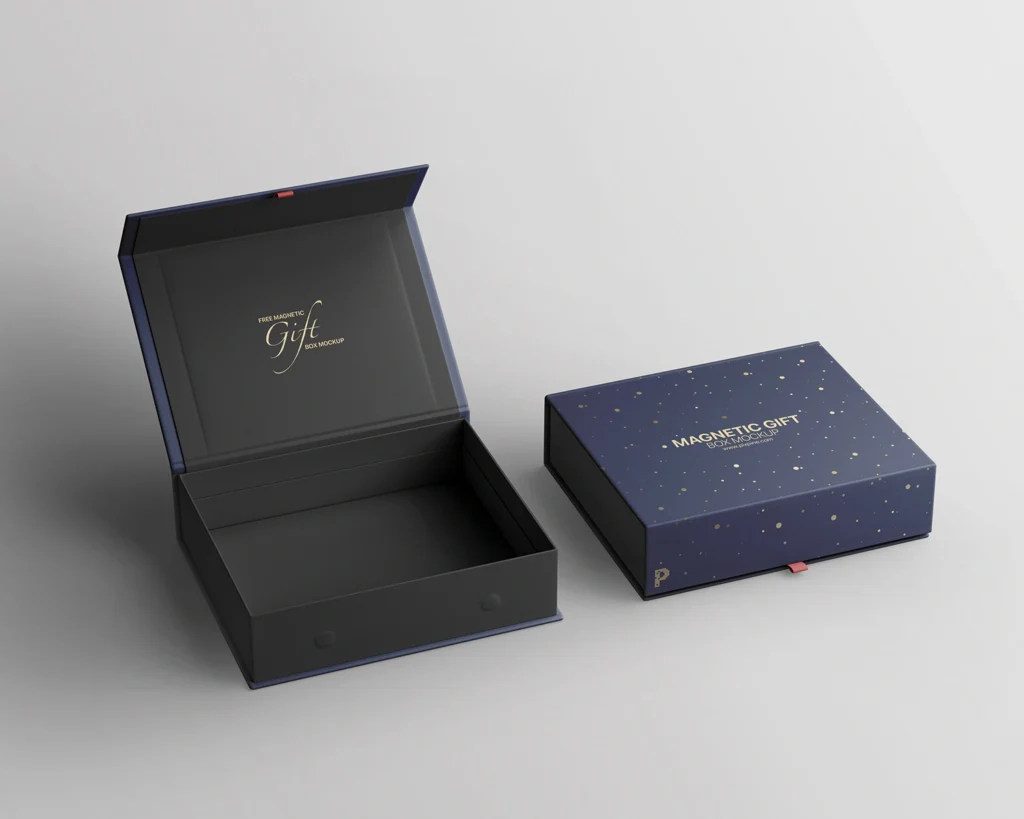
Grey board, also known as rigid board, is a dense and highly rigid paperboard commonly used for premium packaging.It provides excellent structural stability and is often covered with printed paper, specialty paper, fabric, or other decorative materials.
Best for:
- Luxury gift boxes
- Jewelry boxes
- Premium product packaging
- Candle boxes
- High-end retail packaging
Rigid board can be combined with premium finishing techniques such as foil stamping, embossing, debossing, and soft-touch lamination.For luxury applications, explore our custom rigid box packaging solutions.

How to Choose Packaging Materials by Product Type
The most practical way to select a packaging material is to start with the product you are selling.
Jewelry
Jewelry is usually small, lightweight, and relatively high in perceived value.For these products, packaging needs to provide both protection and premium presentation.
Recommended materials:
- Grey board rigid boxes
- Premium paperboard
- Custom inserts
- Soft-touch or specialty finishes
A rigid jewelry box can provide a stronger premium impression than a simple folding carton.
Clothing and Apparel
Clothing generally does not require heavy structural protection, so packaging can focus more on appearance, convenience, and shipping efficiency.
Recommended materials:
- Kraft paper bags
- Paper shopping bags
- Mailer boxes
- Folding cartons
For retail stores, custom paper shopping bags can strengthen brand presentation. For e-commerce, mailer boxes can provide a more structured unboxing experience.
Cosmetics and Skincare
Cosmetic and skincare products often require packaging that combines product protection with strong visual presentation.
Recommended materials:
- White cardboard
- Folding cartons
- Rigid boxes
- Custom inserts
White cardboard is particularly suitable when detailed printing and premium branding are important.
E-commerce Products
E-commerce packaging needs to withstand transportation while controlling package weight and volume.
Recommended materials:
- Corrugated cardboard
- Mailer boxes
- Kraft paper
- Paper-based protective inserts
Package dimensions are especially important for online businesses because oversized packaging can increase shipping costs.
Food and Bakery Products
Food packaging must prioritize food safety, hygiene, and compliance with applicable requirements.Recommended materials:
- Food-grade kraft paper
- Food-safe paperboard
- Grease-resistant paper
Packaging should be selected according to the type of food, moisture or grease exposure, storage conditions, and applicable regulations.
Luxury Gifts
Luxury gift packaging places greater emphasis on presentation, tactile experience, and perceived value.Recommended materials:
- Grey board
- Rigid board
- Premium wrapping paper
- Specialty paper
Finishing options such as foil stamping, embossing, and soft-touch lamination can further enhance the appearance and feel of the package.
How to Choose Packaging Materials for Shipping
Packaging material selection becomes especially important when products are shipped over long distances.
Domestic Shipping
For shorter shipping distances with relatively controlled handling, lightweight packaging may be sufficient for many products.However, the material should still provide enough protection for the product’s weight and fragility.
International Shipping
International shipments may pass through multiple transportation and handling stages.Products may experience:
- Compression
- Vibration
- Impact
- Temperature changes
- Humidity
- Repeated loading and unloading
For these conditions, stronger corrugated structures or additional internal protection may be appropriate.
E-commerce Fulfillment
E-commerce packaging should balance protection with shipping efficiency.Avoid using a box that is unnecessarily large. A properly sized package can reduce wasted material and help control dimensional shipping costs.
How to Control Packaging Costs
Choosing packaging based only on the lowest unit price can lead to higher costs later.A better approach is to evaluate the total packaging cost.
Reduce Unnecessary Material
Overly thick paperboard or oversized boxes may add cost without providing meaningful additional protection.Choose the material and thickness according to the actual requirements of the product.
Optimize Package Dimensions
Reducing unused space can lower:
- Material consumption
- Carton volume
- Storage requirements
- Shipping costs
This is particularly important for e-commerce businesses.
Balance Protection and Weight
A stronger package is not automatically a better package.The goal is to achieve sufficient protection while keeping the packaging as lightweight and compact as practical.
Consider Damage Costs
If a cheaper package results in more damaged products, returns, replacements, and customer complaints, the apparent material savings may disappear.Packaging should therefore be evaluated based on its total cost of ownership, not only its production price.
A Step-by-Step Packaging Material Selection Process
If you are unsure which material to choose, use this simple process.
Step 1: Identify Your Product
Determine the product’s:
- Weight
- Dimensions
- Shape
- Fragility
- Value
- Surface sensitivity
Step 2: Determine the Required Protection
Ask how much protection the product needs during storage, handling, and transportation.A durable product may require only basic packaging, while fragile products may require multiple protective layers.
Step 3: Identify the Shipping Environment
Consider whether the product will be:
- Sold in physical stores
- Shipped domestically
- Shipped internationally
- Fulfilled through an e-commerce warehouse
- Transported in bulk
Step 4: Define Your Budget
Set a realistic packaging budget per unit while considering printing, finishing, inserts, assembly, and shipping.
Step 5: Match the Material to Your Brand
Choose materials that support your desired brand image.For example, kraft paper can communicate a natural and eco-conscious identity, while rigid boxes can create a premium and luxurious impression.
Step 6: Consider Sustainability
Review whether recyclable, recycled, FSC-certified, or plastic-free materials can meet your requirements.
Step 7: Test Before Mass Production
Always test packaging before placing a large production order.
Check:
- Product fit
- Structural strength
- Closure performance
- Compression resistance
- Drop resistance
- Shipping performance
A small sample test can help identify problems before they affect a large production run.
How to Optimize Your Packaging Material Choice
Choose the Right Thickness
Thicker materials are not always better.The appropriate GSM, board thickness, or corrugated structure depends on product weight, package dimensions, stacking requirements, and shipping conditions.
Improve the Packaging Structure
Good structural design can sometimes provide more protection than simply increasing material thickness.Custom inserts, dividers, partitions, and fitted structures can help prevent product movement and distribute external pressure more effectively.
Consider the Unboxing Experience
For consumer brands, packaging is part of the product experience.
Details such as:
- Custom printing
- Branded tissue paper
- Custom inserts
- Thank-you cards
- Foil stamping
- Embossing
can create a more memorable unboxing experience.
Optimize for Shipping
Use lightweight but sufficiently strong materials and avoid excessive empty space.For e-commerce businesses, even a small reduction in package dimensions can become significant when multiplied across thousands of shipments.
Packaging Material Trends to Watch
Packaging materials continue to evolve as brands look for better performance, sustainability, and customer experiences.
Recyclable and Plastic-Free Packaging
Paper-based alternatives are increasingly being considered by brands seeking to reduce unnecessary plastic in their packaging.Kraft paper, recycled paperboard, and other fiber-based materials can support more sustainable packaging strategies when appropriately designed.
Lightweight Packaging
Reducing unnecessary packaging material can help lower both environmental impact and shipping costs.Many brands are therefore focusing on lightweight structures that still provide adequate product protection.
Minimalist Luxury Packaging
Luxury packaging is increasingly moving toward cleaner designs, subtle textures, and selective premium finishing rather than excessive decoration.This approach can create a refined appearance while keeping the packaging visually simple.
FSC-Certified and Recycled Materials
Brands with sustainability goals may consider FSC-certified paper and recycled paper-based materials where appropriate.However, material selection should always consider the complete packaging application, including strength, printing requirements, product protection, and end-of-life disposal.
Frequently Asked Questions
What is the best packaging material for shipping?
Corrugated cardboard is one of the most practical choices for shipping because it provides a good balance of strength, weight, and cost. The appropriate structure depends on product weight, fragility, package dimensions, and shipping conditions.
Is kraft paper suitable for heavy products?
Kraft paper can be suitable for bags, wrapping, and certain packaging applications, but it is not automatically the best choice for heavy products. Products requiring strong structural protection may need corrugated cardboard or rigid packaging instead.
What is the difference between paperboard and corrugated cardboard?
Paperboard is generally a flat, relatively lightweight board used for folding cartons and retail packaging. Corrugated cardboard contains a fluted layer between linerboards, giving it greater structural strength and cushioning for shipping applications.
What packaging material is best for luxury products?
Rigid board is commonly used for luxury packaging because it provides excellent stiffness and a premium appearance. It can be combined with specialty papers and finishes such as foil stamping, embossing, and soft-touch lamination.
How do I choose packaging materials for e-commerce?
Start with product weight, fragility, dimensions, and shipping conditions. Corrugated boxes and mailer boxes are common choices because they provide protection while allowing brands to control package size and shipping weight.
Is eco-friendly packaging more expensive?
Not necessarily. Kraft paper and recycled paper-based materials can be cost-effective options. However, certain premium sustainable materials or specialized structures may cost more. The best choice depends on the required performance, quantity, printing, and design.
Should I test packaging before mass production?
Yes. Packaging samples should be tested for product fit, structural strength, closure performance, and shipping conditions before large-scale production. Testing can help identify design problems and reduce the risk of product damage.
Conclusion
Choosing the right packaging material requires more than comparing material prices. The best solution depends on the relationship between your product, protection requirements, shipping conditions, brand positioning, budget, and sustainability goals.
Kraft paper can be a practical option for flexible and eco-conscious packaging. Corrugated cardboard is well suited to shipping and e-commerce applications. White cardboard works well when printing and retail presentation are priorities, while grey board provides the rigidity and premium appearance required for luxury packaging.The key is to choose a material that provides enough protection without unnecessary weight, cost, or material use.Before placing a large packaging order, evaluate the product requirements, compare suitable materials, test samples, and consider the complete cost of packaging and shipping.
Looking for custom packaging designed around your product, brand, and shipping requirements?At Hainan Lucklin Technology Co., Ltd., we provide customized paper packaging solutions for e-commerce, retail, fashion, cosmetics, jewelry, gifts, and other brands.
Contact us to discuss your packaging requirements and request a custom quote.