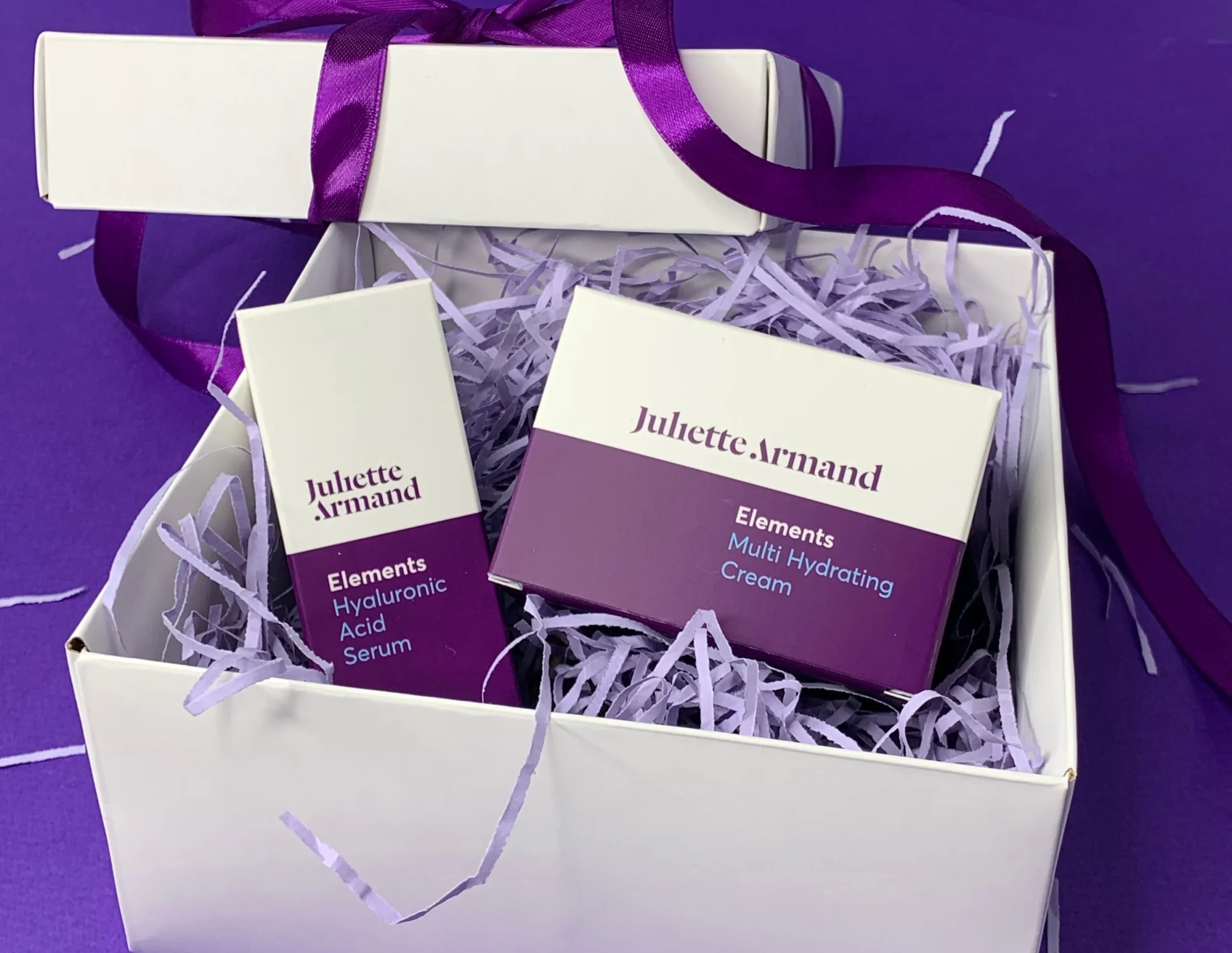
Jewelry packaging does more than protect jewelry. It also creates a first impression, adds value to your brand, and gives customers a better unboxing experience.
For jewelry brands, retailers, and wholesalers, choosing the right custom jewelry boxes involves more than selecting an attractive design. You also need to consider the type of jewelry, box structure, materials, inserts, size, and printing options.Rings, necklaces, earrings, and bracelets all have different packaging requirements. A well-designed jewelry box should hold each piece securely while presenting it in a way that matches your brand.
In this guide, we’ll explore different types of jewelry boxes, popular structures, materials, insert options, and customization choices. We’ll also explain what to consider when ordering custom jewelry boxes wholesale.
Why Choose Custom Jewelry Boxes?
Custom jewelry boxes allow brands to create packaging that fits their products and reflects their brand identity. Instead of using standard boxes that may not suit every piece, you can choose the right size, structure, material, and insert.
For jewelry brands, retailers, and wholesalers, custom boxes offer several benefits:
- Brand recognition: Add your logo, brand colors, and special finishes to make your packaging recognizable.
- Product protection: Choose suitable structures and inserts to hold jewelry in place and reduce movement, scratches, and tangling.
- Better presentation: Well-designed boxes make jewelry more attractive in retail stores, gift presentations, and online orders.
- Flexible sizing: Create different box sizes and inserts for rings, necklaces, bracelets, earrings, and jewelry sets.
- Consistent branding: Use matching colors, materials, and logo placement across different jewelry collections.
Whether you sell fine jewelry or everyday fashion accessories, a suitable custom jewelry box can help create a more professional customer experience.
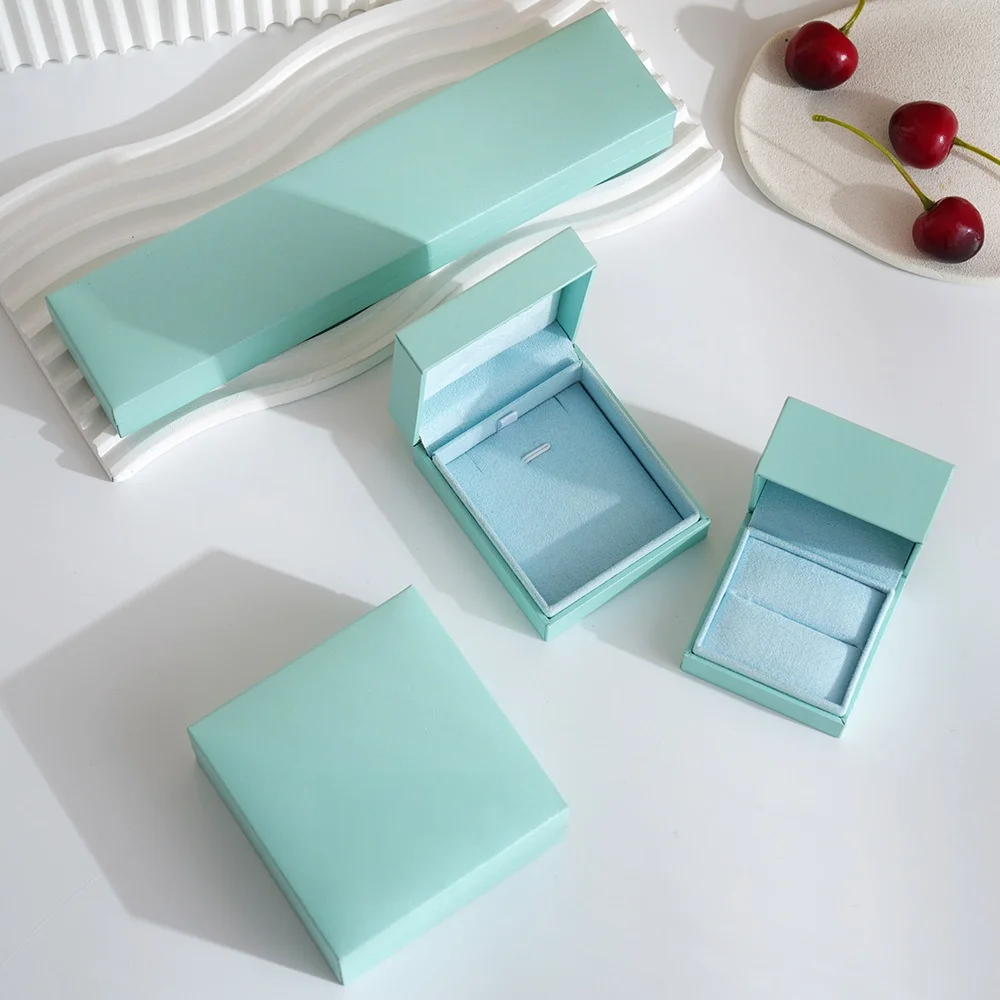
Different Types of Custom Jewelry Boxes
Different jewelry products need different packaging designs. A ring box, for example, requires a different insert from a necklace box. The right choice depends on the jewelry size, shape, presentation requirements, and budget.
Here are some popular types of custom jewelry boxes.
Ring Boxes
Rings are small, but they need secure and attractive packaging. Custom ring boxes usually feature a fitted insert with a narrow slot to hold the ring upright.They are commonly used for engagement rings, wedding bands, fashion rings, and fine jewelry collections.You can customize the box with velvet-covered inserts, specialty paper, soft interior materials, and branded logos.When choosing a ring box, consider the ring size, setting height, and insert design. The ring should stay in place without being difficult to remove.
Necklace Boxes
Necklaces need enough space to keep their chains organized and prevent tangling. Custom necklace boxes can include a necklace card, slotted insert, or specially shaped pad to hold the chain and pendant.For longer necklaces or larger pendants, you may need a wider or deeper box with a suitable insert.A well-designed necklace box should keep the jewelry in position while allowing customers to see the product clearly when opening the package.
Earring Boxes
Custom earring boxes are designed to hold different types of earrings, including studs, hoops, and drop earrings.Depending on the earring style, the insert may include small holes, slots, or an earring card to keep each pair together.For stud earrings, a card-style insert can work well. Larger hoops or drop earrings may need more space and a specially designed insert.The box size should also allow enough room to display the earrings without pressing against their decorative parts.
Bracelet Boxes
Bracelets often need wider or longer inserts than rings, especially when they have rigid shapes, large charms, or decorative details.A bracelet box may use a cushion-shaped insert or a fitted holder to keep the product from moving around.For matching jewelry collections, brands can use coordinated bracelet, necklace, and ring boxes with the same exterior paper, logo, and colors.
Jewelry Gift Boxes
Jewelry gift boxes are designed to make jewelry more attractive for special occasions, retail sales, and gift orders.They can be used for individual jewelry pieces or matching sets, such as necklaces with earrings.Custom jewelry gift boxes can include ribbons, printed sleeves, gift messages, and branded interior details.For brands selling premium collections, luxury jewelry boxes with rigid structures, decorative paper, and carefully designed inserts can create a more refined presentation.
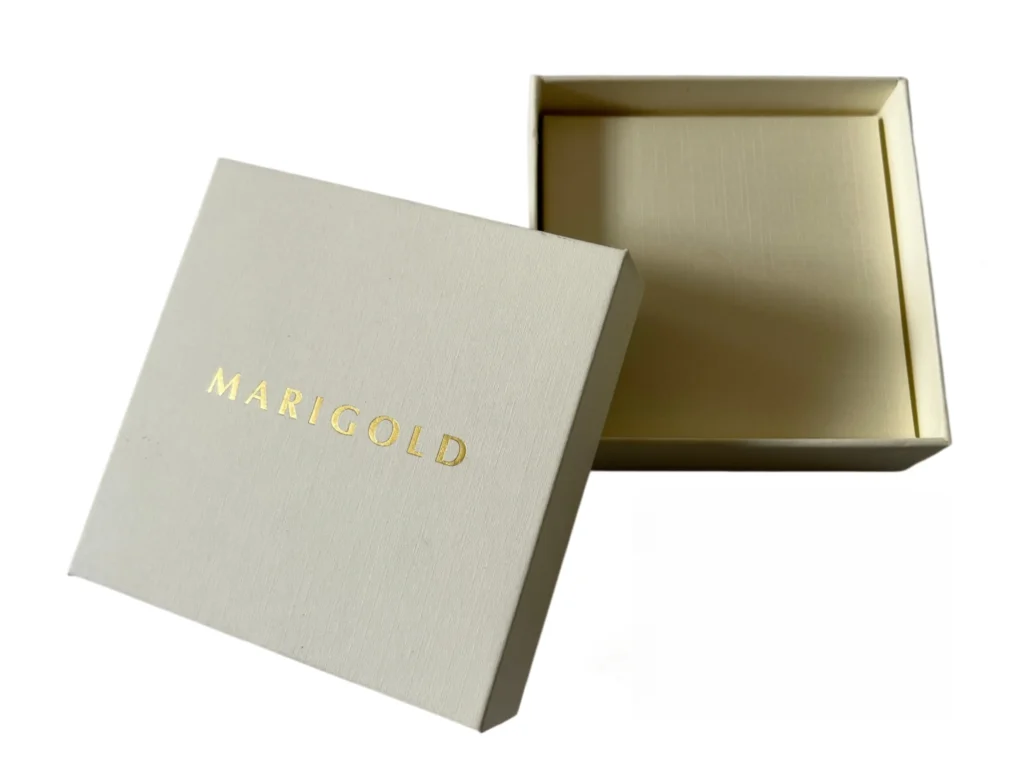
Popular Jewelry Box Structures
Besides choosing a box for each type of jewelry, you also need to select a suitable box structure.Different structures offer different opening experiences, storage options, and visual styles.
Two-Piece Jewelry Boxes
Two-piece jewelry boxes feature a separate lid and base. They are a classic choice for rings, earrings, necklaces, and jewelry gift sets. Their simple structure makes them easy to customize with different paper materials, colors, sizes, and logo finishes. You can also explore our guide to two-piece rigid boxes to learn more about their structure and customization options.
Drawer Jewelry Boxes
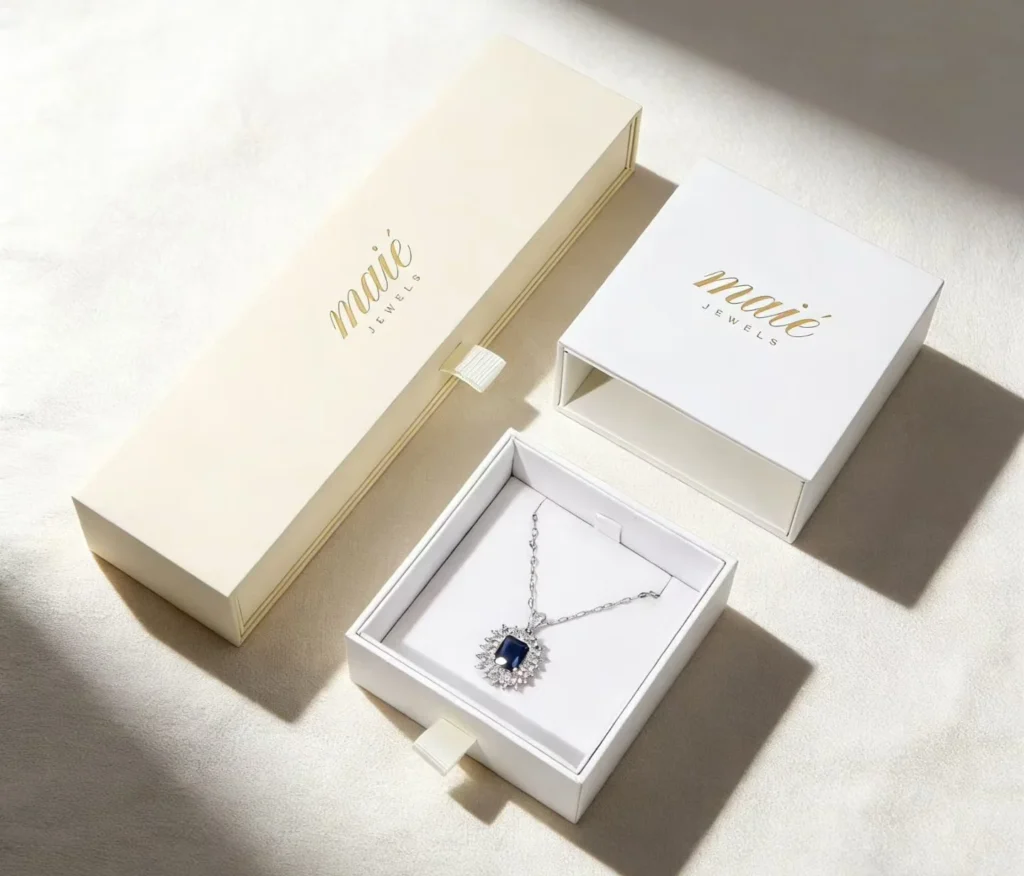
Drawer jewelry boxes use a sliding drawer that pulls out from the outer sleeve.This design creates a different opening experience and works well for small jewelry pieces, gift sets, and premium collections.A ribbon pull or finger notch can be added to make the drawer easier to open.
Magnetic Jewelry Boxes
Magnetic jewelry boxes feature a built-in magnetic closure that keeps the lid securely closed. They offer a clean and modern appearance and are often used for premium jewelry packaging and gift sets. The exterior and interior can be customized with printed paper, foil stamping, and fitted inserts. For more details, see our guide to magnetic gift boxes, including their structures, materials, and customization options.
Hinged Lid Jewelry Boxes
Hinged lid jewelry boxes have a lid connected to the base, allowing the box to open like a small case.This structure provides convenient access to the jewelry and can create a classic presentation.It works well for selected ring boxes, necklace boxes, and other premium jewelry packaging designs.The right structure depends on your product dimensions, brand style, and packaging budget.
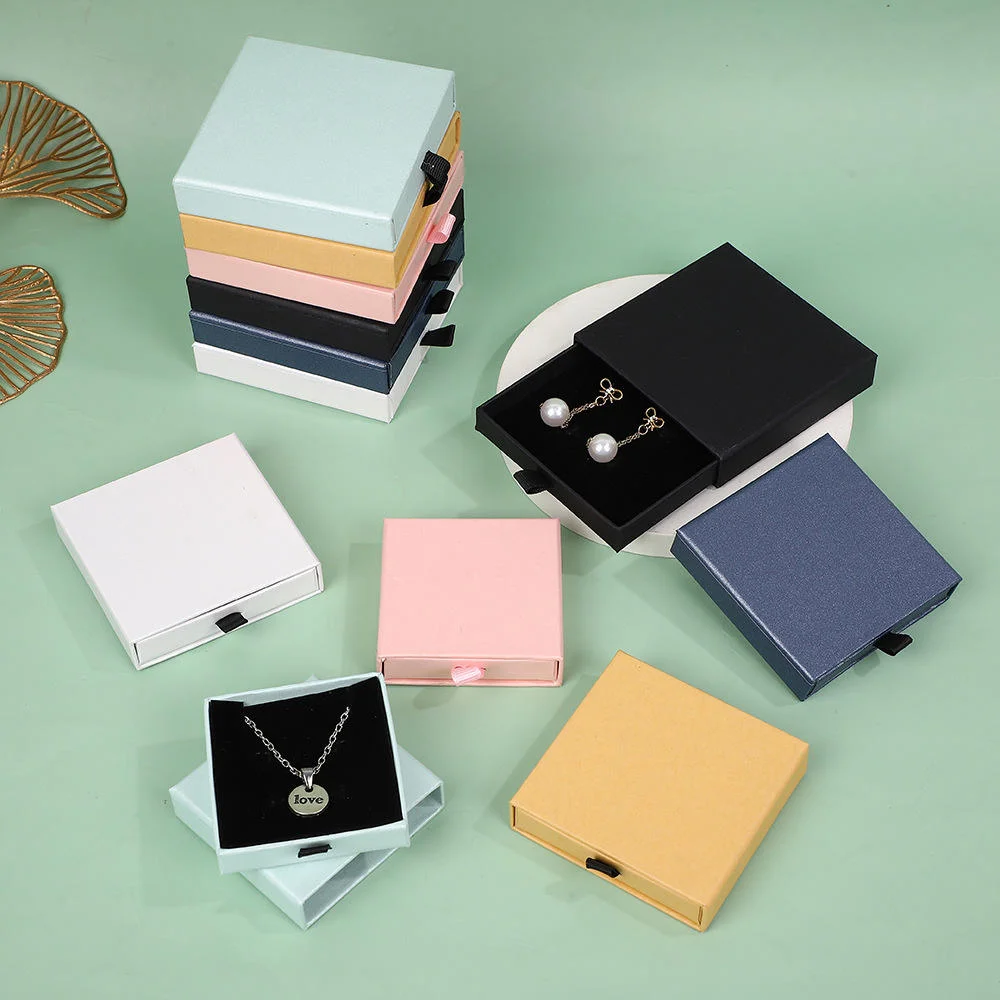
Materials Used for Custom Jewelry Boxes
The material affects how a jewelry box looks, feels, and protects the product. Different materials also offer different printing and finishing possibilities.Here are some common materials used for custom jewelry boxes.
Rigid Greyboard
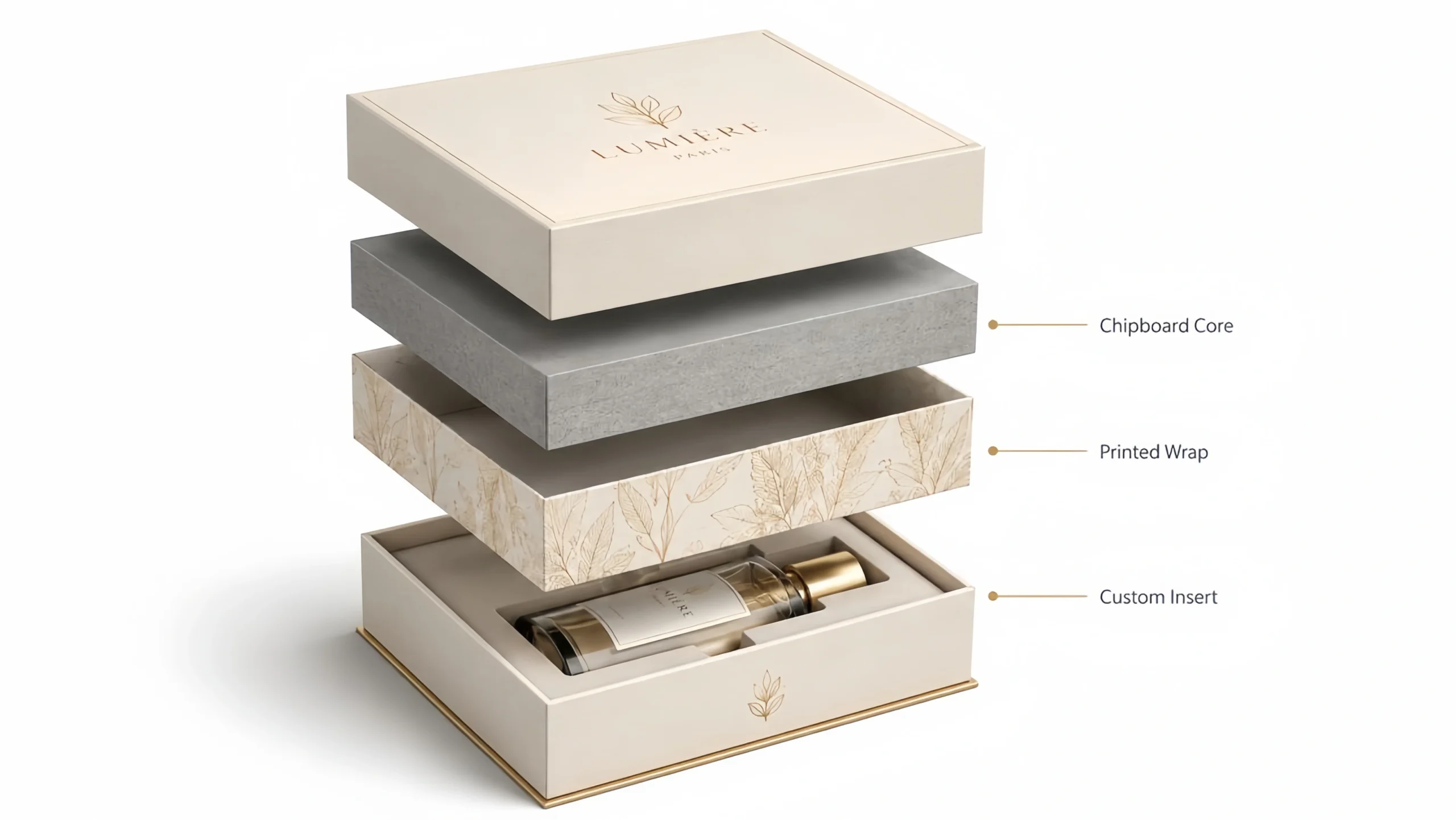
Rigid greyboard is widely used for premium jewelry boxes because it provides a strong and stable structure. It is a popular material for custom rigid boxes, including two-piece boxes, magnetic closure boxes, and drawer boxes..It works well for two-piece boxes, magnetic closure boxes, drawer boxes, and hinged lid designs.The greyboard is usually covered with printed paper, specialty paper, or fabric to create the desired appearance.For brands looking for luxury jewelry boxes, rigid greyboard offers a solid foundation for premium finishes and fitted inserts.
Specialty Paper
Specialty paper comes in different colors, textures, and decorative effects. It can help create a distinctive look without changing the basic box structure.
Popular choices include:
- Coated paper for clear printing and detailed graphics.
- Uncoated paper for a natural, understated appearance.
- Textured paper for added visual and tactile interest.
- Decorative specialty paper for more distinctive packaging designs.
The right paper depends on your brand colors, logo, finishing requirements, and budget. Learn more about rigid box materials, including greyboard, wrapping paper, and inserts, in our detailed guide.
Velvet and Fabric Finishes
Velvet and fabric finishes create a soft texture and a more refined appearance.They are often used for premium jewelry packaging, especially for rings, necklaces, bracelets, and gift sets.Fabric can also be used to cover the insert, creating a coordinated look between the inside and outside of the box.When choosing velvet or fabric, consider its color, texture, durability, and compatibility with your logo design.
Paperboard
Paperboard is a practical option for lightweight jewelry packaging and more cost-conscious designs.Depending on its thickness and construction, it can be used for folding cartons, earring boxes, and other retail packaging.Paperboard boxes can be printed with brand logos, product information, and decorative patterns.They are suitable for brands that need customizable packaging while keeping material and production costs under control.
Choosing the Right Inserts for Jewelry Boxes
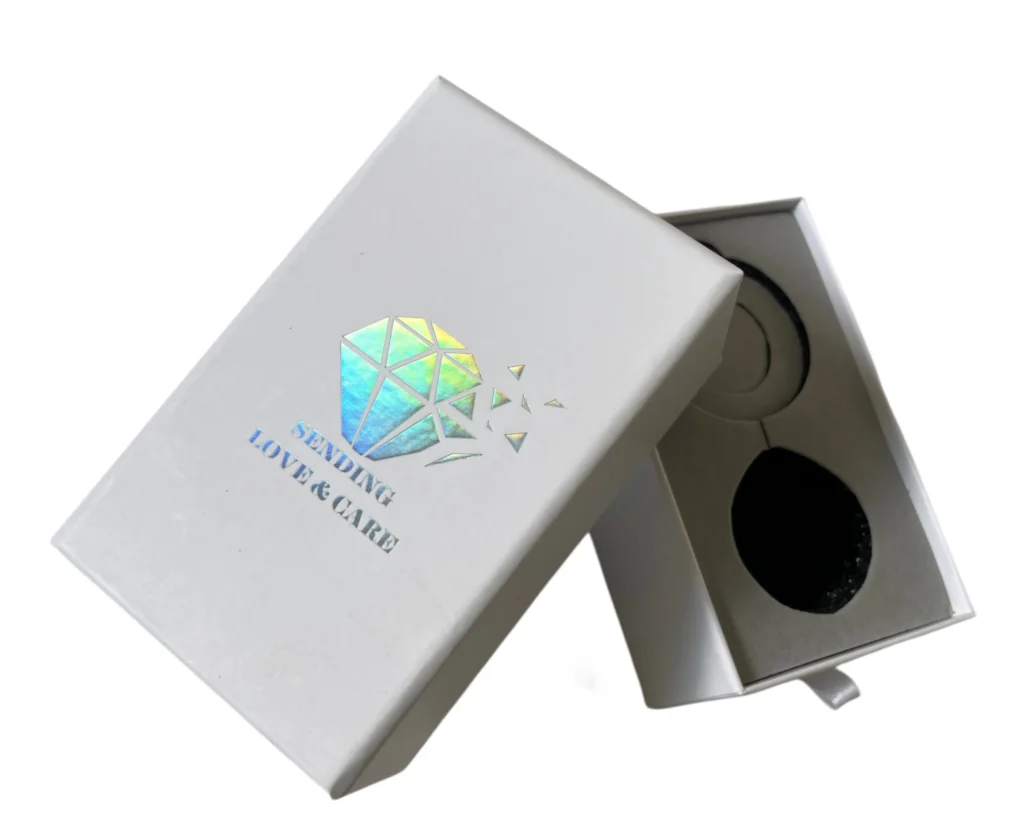
The insert is one of the most important parts of custom jewelry packaging. It keeps the jewelry in position, helps prevent movement, and makes the product easier to display.The best insert depends on the jewelry shape, weight, size, and presentation requirements.
Here are some common insert options for different jewelry products.
| Jewelry Type | Recommended Insert |
|---|---|
| Rings | Ring slot or velvet-covered ring insert |
| Earrings | Earring card or fitted earring insert |
| Necklaces | Necklace pad or slotted necklace insert |
| Bracelets | Bracelet cushion or fitted holder |
| Jewelry Sets | Multi-compartment insert |
Velvet-Covered Inserts
Velvet-covered inserts provide a soft surface and a premium appearance. They are commonly used for rings, earrings, pendants, and jewelry gift sets.They can include narrow slots, shaped cavities, or other features designed to hold jewelry securely.
Foam and EVA Inserts
Foam inserts can be cut into specific shapes to accommodate different jewelry designs.EVA foam is another option when a more defined and supportive insert is required. The material density, thickness, and cavity dimensions should be selected according to the product.Foam inserts can also be covered with velvet or fabric to create a more refined interior.
Paperboard Inserts
Paperboard inserts are a practical choice for lightweight jewelry and coordinated packaging sets.They can be designed with slots, folded sections, or separate compartments to hold jewelry cards and individual products.They may also suit brands looking for paper-based packaging components.
Custom Jewelry Box Inserts
When ordering jewelry boxes with inserts, provide accurate product dimensions and, if possible, a physical product sample or clear photographs.The insert should hold the jewelry securely without putting too much pressure on delicate parts. It should also allow customers to remove the product easily.Before mass production, check the insert fit using an actual jewelry sample. This is especially important for rings, pendant necklaces, and sets containing multiple pieces.
How to Choose the Right Jewelry Box Size
There is no single standard size for every jewelry product. The correct dimensions depend on the jewelry itself, the insert design, and the desired presentation.
The following dimensions are illustrative starting points for discussing your packaging requirements with a manufacturer. They are not universal industry standards.
| Jewelry Type | Example Box Dimensions (L × W × H) |
|---|---|
| Ring box | 5 × 5 × 4 cm |
| Earring box | 7 × 7 × 3 cm |
| Pendant or short necklace box | 9 × 9 × 3.5 cm |
| Bracelet box | 10 × 10 × 4 cm |
| Jewelry set box | 15 × 12 × 5 cm |
Actual dimensions should be confirmed based on the jewelry size, insert construction, and box structure.
Measure Your Jewelry Before Ordering
Before requesting a quotation, prepare the following information:
- The length, width, and height of the jewelry.
- The size of the pendant, clasp, or other components.
- The number of jewelry pieces in each box.
- The preferred insert type and thickness.
- Whether the jewelry box needs to fit inside an outer shipping carton or gift bag.
Remember that the finished box dimensions may differ from the available internal space. Ask your manufacturer to confirm the usable internal dimensions before approving the design.
Custom Jewelry Box Design and Printing Options
Custom jewelry boxes can be designed in different colors, sizes, and finishes to match your brand identity.
Custom Sizes and Colors
You can choose the box dimensions according to your jewelry products and select exterior and interior colors that match your brand.For jewelry collections with different product sizes, you can maintain a consistent appearance while using different box dimensions and inserts.
Logo Printing
Your brand logo can be applied using several printing and finishing methods.
Common options include:
- Gold and silver foil stamping: Adds a metallic effect to the logo.
- Embossing: Raises the logo or selected design elements.
- Debossing: Presses the logo into the material.
- Silkscreen printing: Suitable for selected solid-color logo applications.
- Offset printing: Supports detailed graphics and larger printed areas.
The most suitable method depends on the covering material, artwork, order quantity, and budget.
Interior Printing
The inside of a jewelry box can also be customized with brand logos, patterns, messages, or matching colors.Interior printing helps create a consistent appearance when customers open the box.
Matte, Glossy, and Textured Finishes
Matte finishes offer a subtle appearance, while glossy finishes create more shine. Textured paper adds depth and a different feel.For luxury jewelry boxes, combining a simple color palette with foil stamping or embossing can create a distinctive look without making the design too complicated.
Custom Jewelry Boxes Wholesale: MOQ and Pricing
For jewelry brands, retailers, and wholesalers, ordering custom jewelry boxes wholesale helps maintain consistent packaging across product lines.However, the unit price depends on several factors, not just the order quantity.
Key pricing factors include:
- Box structure: Rigid boxes generally require more material and processing than simple folding cartons.
- Box dimensions: Larger boxes usually require more materials.
- Exterior material: Specialty paper and fabric finishes may increase the cost.
- Insert design: Custom-shaped inserts may require additional tooling or processing.
- Printing and finishing: Foil stamping, embossing, and multiple printing colors affect production costs.
- Order quantity: Larger quantities may reduce the unit cost, depending on the design and production requirements.
- Shipping: Carton dimensions, order volume, destination, and shipping method affect the delivered cost.
At LucklinPak, custom box and bag orders generally start from 500 pieces per size and design. The final MOQ should be confirmed according to the box structure, materials, and finishing requirements.If you need several box sizes, ask whether each size is treated as a separate production specification. Different sizes and designs may have different minimum order requirements.
For an accurate quotation, prepare your preferred box dimensions, quantity, logo artwork, insert requirements, and delivery destination.
How to Order Custom Jewelry Boxes
Ordering custom jewelry boxes involves several steps, from confirming the product requirements to approving the final sample.
Step 1: Confirm Your Requirements
Prepare your jewelry dimensions, preferred box style, materials, logo artwork, quantity, and delivery destination.If you are unsure which structure is suitable, ask your manufacturer to recommend options based on your product and target budget.
Step 2: Review the Design
Confirm the exterior artwork, logo placement, colors, insert layout, and box dimensions.For printed packaging, make sure the artwork and finishing specifications are clearly documented.
Step 3: Approve the Sample
Check the finished size, box opening and closing, insert fit, logo position, color, and overall appearance.Test the sample with the actual jewelry rather than relying only on a drawing.
Step 4: Confirm Mass Production
After approving the sample and quotation, confirm the order quantity, production schedule, packing requirements, and shipping terms.Allow time for sampling, sample approval, mass production, and transportation. The exact schedule depends on the complexity of the box and the order requirements.
How to Choose the Right Jewelry Box Manufacturer
Choosing a suitable jewelry box manufacturer is important for getting packaging that meets your product and branding requirements.
Before placing an order, consider these points:
- Product experience: Ask whether the manufacturer has experience producing similar jewelry boxes and inserts.
- Material options: Check whether it can provide suitable rigid board, paper, fabric finishes, and insert materials.
- Customization capability: Confirm whether different sizes, colors, logos, and finishing options are available.
- Sampling capability: Request a sample or clear photographs of comparable products before approving a bulk order.
- Quality control: Ask how the manufacturer checks dimensions, printing, finishing, assembly, and packing.
- Production planning: Confirm MOQ, sample lead time, mass-production lead time, and how design changes are handled.
- Shipping arrangements: Clarify shipping terms, destination costs, and how the goods will be packed for transportation.
A reliable supplier should be able to explain the differences between materials, structures, appearance, and cost instead of simply offering the lowest price.
Frequently Asked Questions About Custom Jewelry Boxes
Can I customize jewelry boxes with my brand logo?
Yes. Custom jewelry boxes can include your brand logo through foil stamping, embossing, debossing, silkscreen printing, or offset printing. The best option depends on the material and design.
What is the best material for luxury jewelry boxes?
Rigid greyboard is a popular choice for luxury jewelry boxes because it provides a strong structure and a premium feel. It can be covered with specialty paper, velvet, or fabric and finished with foil stamping or embossing.
What type of insert is best for jewelry boxes?
The best insert depends on the jewelry. Rings usually need ring slots, earrings can use earring cards or fitted inserts, necklaces need necklace pads or slotted inserts, and bracelets often use cushions or shaped holders.
What is the MOQ for custom jewelry boxes?
MOQ depends on the box structure, size, material, and customization requirements. At LucklinPak, custom box orders generally start from 500 pieces per size and design. Contact us to confirm the MOQ for your specific project.
Can I order different sizes of custom jewelry boxes?
Yes. You can order different sizes for rings, necklaces, earrings, bracelets, and jewelry sets. Each size may be treated as a separate production specification, so confirm the quantity and MOQ for each design before ordering.
Create Custom Jewelry Boxes for Your Brand
Choosing the right custom jewelry boxes involves more than selecting an attractive exterior. The box structure, materials, inserts, dimensions, printing, and order quantity all affect the final result. By understanding your jewelry products and confirming the packaging details before production, you can create boxes that protect your products and present your brand consistently.
Looking for custom jewelry boxes for your brand?
LucklinPak offers custom jewelry packaging solutions with tailored box structures, materials, inserts, and printing options. Share your product dimensions, quantity, and design ideas with our team. We can help you find a suitable packaging solution for your project.
Explore Our Custom Jewelry Packaging or Contact Us to discuss your project and request a quote.