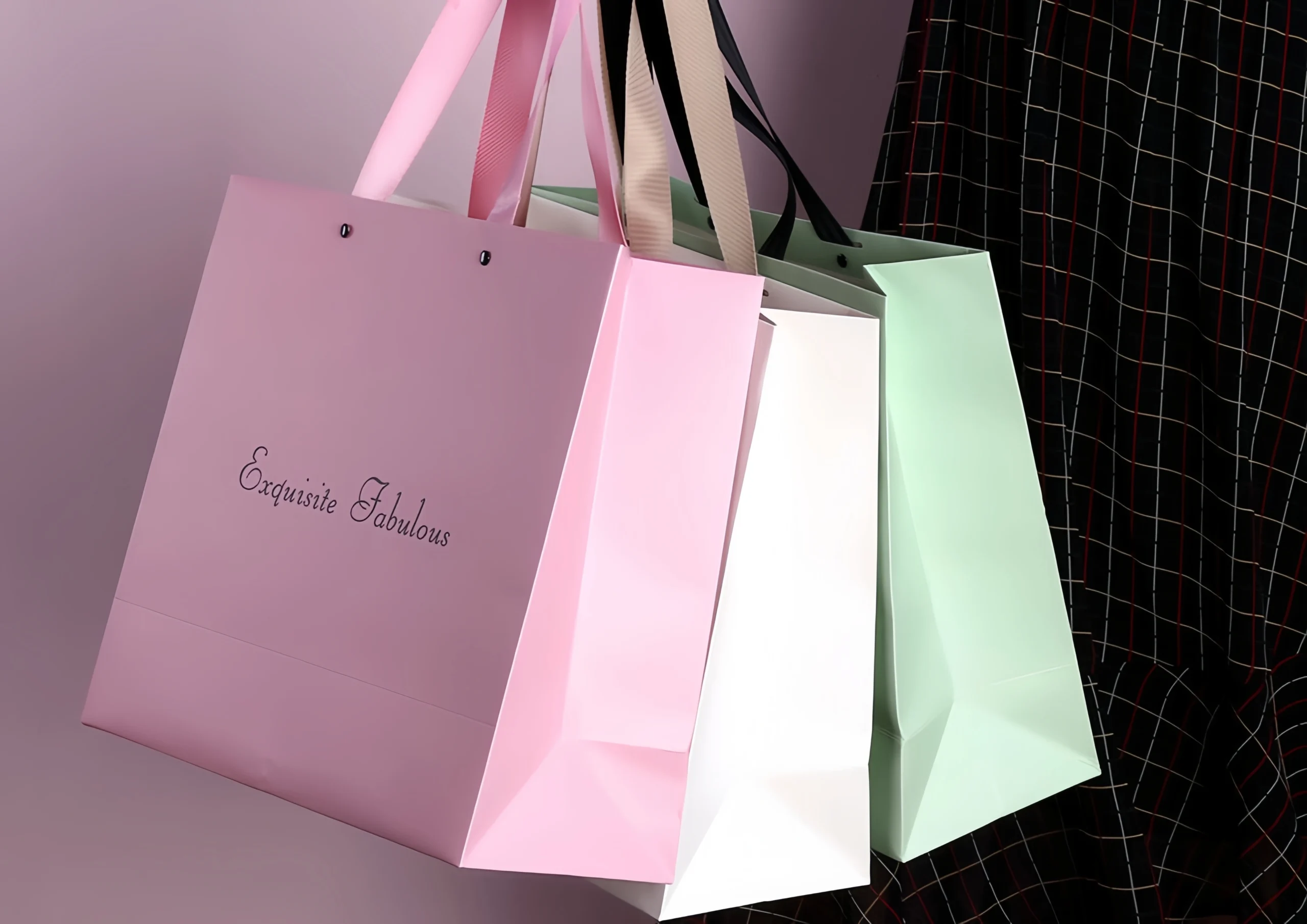
A paper shopping bag may look simple, but its strength depends on much more than the thickness of the paper.The answer depends on several factors, including the type and thickness of the paper, bag size, bottom construction, handle material, and reinforcement. A small paper bag used for jewelry will have very different load requirements from a large shopping bag designed for clothing, shoes, books, or packaged products.Choosing the right bag size is also important when considering product weight and capacity.
So, how much weight can a paper shopping bag actually hold?For many retail applications, a well-made custom paper shopping bag can typically carry around 2–5 kg (4.4–11 lbs). Stronger bags with heavier paper, reinforced handles, and a reinforced bottom can be designed for higher loads. However, there is no single weight limit that applies to every paper bag.
In this guide, we’ll look at the main factors that determine paper bag strength and explain how to choose the right construction for your products.

What Determines How Much Weight a Paper Bag Can Hold?
When designing a custom paper shopping bag, several components work together to determine its load capacity.The most important factors include:
- Paper material
- Paper GSM
- Bag size
- Bottom construction
- Handle type
- Handle reinforcement
- Product shape and weight distribution
- Printing and finishing
- Manufacturing quality
A bag made from 250 GSM paper is not automatically stronger than every 200 GSM bag. The overall construction matters just as much as the paper itself.
1. Paper Material
The first factor to consider is the type of paper used to manufacture the bag.Common materials include kraft paper, white kraft paper, coated art paper, and other specialty papers.
Kraft Paper
Kraft paper is widely used for shopping bags because it offers a natural appearance and good strength.It is especially suitable for:
- Grocery stores
- Bakeries
- Clothing brands
- Cafes
- Gift shops
- Eco-conscious brands
Brown kraft paper also gives packaging a natural and sustainable appearance.
White Kraft Paper
White kraft paper provides a cleaner appearance while maintaining many of the practical benefits of kraft paper.It can be a good choice for brands that want a simple, modern shopping bag with strong printing performance.
Coated Art Paper
Coated paper is often selected for premium retail packaging because it provides a smooth surface for high-quality printing.It works particularly well for:
- Fashion brands
- Jewelry stores
- Cosmetics brands
- Luxury boutiques
- Lifestyle brands
For heavier products, the paper should normally be combined with suitable reinforcement rather than relying on the paper alone.
2. Paper GSM and Bag Strength
GSM means grams per square meter. It is commonly used to describe paper weight.In general, a higher GSM means thicker and heavier paper, but GSM alone does not determine the final strength of a shopping bag.
For example:
- 150–170 GSM: Suitable for lightweight applications
- 180–220 GSM: Suitable for many everyday retail bags
- 230–250 GSM: Better suited to premium and stronger shopping bags
- 250 GSM and above: Can be considered when greater rigidity and strength are required
These are general guidelines rather than fixed load ratings.A 250 GSM bag with weak handles or a poorly reinforced bottom may still fail under a heavy load. Meanwhile, a properly constructed 200 GSM bag may perform very well for lighter retail products.The right paper weight should therefore be selected together with the bag’s size, handle design, and intended load.
GSM is one of the factors to consider when choosing paper for a shopping bag. If you are comparing different paper materials and their characteristics, see our guide to eco-friendly paper bag materials and types.
3. Bag Size Affects Load Capacity
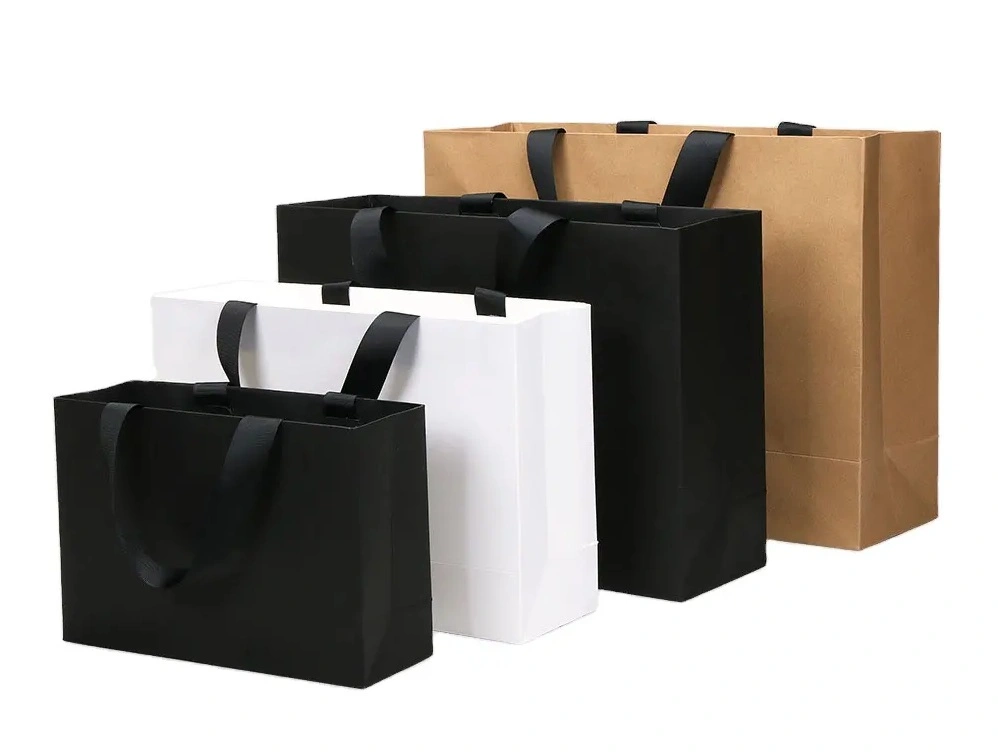
The size of the shopping bag also affects its strength.Larger bags usually have a larger surface area and may be expected to carry more products. However, a larger bag is not automatically stronger.A large bag filled with heavy products creates greater stress on:
- The handles
- The top edge
- The side folds
- The bottom
- The corners
For example, a small jewelry shopping bag may only need to carry a few hundred grams, while a large clothing bag may need to carry several kilograms.This is why the dimensions of the bag should always be considered together with the products that will be placed inside.
4. Bottom Construction Is Extremely Important
The bottom of the bag carries much of the product’s weight.A poorly constructed bottom can become weak when the bag is filled, even if the paper itself is relatively strong.Custom shopping bags can use different bottom structures depending on the application.
For heavier products, manufacturers may use:
- Reinforced cardboard bottoms
- Folded and glued bottom structures
- Additional paper reinforcement
- Stronger side and bottom folds
A reinforced cardboard bottom can help distribute the weight more evenly and reduce stress on the paper.For premium shopping bags, this is especially useful because customers expect the bag to maintain its shape while carrying products.
5. Handle Type Matters
The handle is one of the most important parts of a shopping bag because it is where the bag is lifted.Common handle options include:
Cotton Rope Handles
Cotton rope handles are popular for premium and luxury shopping bags.They provide:
- Good carrying comfort
- A premium appearance
- A soft feel
- Good visual appeal
They are commonly used by fashion, jewelry, cosmetics, and lifestyle brands.
Ribbon Handles
Ribbon handles are often used for gift bags and luxury packaging.They can create a more decorative appearance while providing a comfortable grip.
Twisted Paper Handles
Twisted paper handles are widely used for retail shopping bags and are a practical option for brands looking for a paper-based packaging solution.
Flat Paper Handles
Flat paper handles can provide a clean and simple appearance and work well for many retail applications.The handle should always be selected according to the expected product weight.
When ordering custom bags in larger quantities, it is also important to consider MOQ, production requirements, and supplier capabilities. Our custom shopping bags wholesale guide explains what buyers should know before placing a bulk order.

6. Handle Reinforcement
Even when the handle itself is strong, the connection between the handle and the paper bag can become the weakest point.This is why handle reinforcement is important.
Manufacturers may reinforce the inside of the bag around the handle attachment points. Additional paper or cardboard reinforcement can help distribute the pulling force across a larger area.Without adequate reinforcement, a heavy product may cause the handle to pull through the paper.For bags expected to carry heavier products, it is important to pay attention not only to the handle material but also to how the handle is attached to the bag.
7. Product Weight Distribution
Two bags can contain the same total weight but experience different levels of stress.For example, imagine two shopping bags that each contain 4 kg of products.In the first bag, the products are relatively compact and evenly distributed.In the second bag, one heavy item sits directly against the bottom and creates concentrated pressure.The second bag may experience more stress around the bottom and corners.This is why the shape and weight distribution of the products should be considered when designing the bag.
How Much Weight Can Different Paper Bags Carry?
There is no universal industry standard that gives every shopping bag a specific maximum load. However, the following table can be used as a general starting point for packaging planning.
| Bag Type | Typical Application | Approximate Load Range |
|---|---|---|
| Small lightweight paper bag | Jewelry, accessories, small gifts | Up to 1–2 kg |
| Medium retail paper bag | Cosmetics, clothing, gifts | Around 2–4 kg |
| Strong retail shopping bag | Shoes, clothing, lifestyle products | Around 3–5 kg |
| Reinforced premium bag | Multiple or heavier retail products | Around 4–6 kg or more |
These figures are general guidelines, not guaranteed load ratings.The actual carrying capacity depends on the paper material, GSM, bag dimensions, handle construction, reinforcement, bottom structure, and manufacturing quality.If your products are heavy, a physical sample and load test should be used before mass production.
What Paper GSM Should You Choose?
The best GSM depends on your product rather than simply choosing the thickest available paper.
For Lightweight Products
For jewelry, accessories, small cosmetics, and lightweight gifts, around 150–180 GSM may be sufficient depending on the bag size and construction.
For General Retail
For clothing, shoes, gifts, and everyday retail products, around 180–250 GSM is commonly considered.
For Premium Heavy-Duty Bags
For heavier products or luxury bags that need greater rigidity, heavier paper combined with reinforced construction may be appropriate.
However, simply increasing the GSM can also increase the cost and weight of the finished bag.The goal should be to find the right balance between strength, appearance, cost, and sustainability.
How to Make a Paper Shopping Bag Stronger
If your products are relatively heavy, there are several ways to improve the bag’s strength.
1. Increase the Paper GSM.Using heavier paper can improve stiffness and overall durability.
2. Reinforce the Bottom.A cardboard or additional paper reinforcement can help support the products inside the bag.
3. Strengthen the Handle Area.Reinforcing the area where the handles are attached can reduce the risk of tearing.
4. Choose Stronger Handles.Cotton rope, thicker ribbon, or other suitable handle constructions may be considered depending on the design and product weight.
5. Adjust the Bag Size.An oversized bag may place unnecessary stress on the structure if it is filled with heavy products.Choosing an appropriate size can improve both usability and appearance.
6. Test a Physical Sample.Before ordering a large quantity, test the actual bag with the products it is intended to carry.
Does Lamination Make a Paper Bag Stronger?
Lamination can improve the bag’s surface durability and resistance to moisture, scratches, and everyday handling.
Common options include:
- Matte lamination
- Gloss lamination
- Soft-touch lamination
However, lamination should not be treated as the primary solution for increasing load capacity.A laminated bag can still fail if the handles, bottom, or paper structure are not designed for the intended weight.For heavy products, structural reinforcement is generally more important than choosing a particular surface finish.
Paper Bag Strength for Different Industries
Different industries have different packaging requirements.
Jewelry
Jewelry bags usually carry lightweight products. Appearance is often more important than maximum load capacity.A smaller bag with premium paper, cotton rope handles, and luxury finishing may be appropriate.
Cosmetics and Skincare
Cosmetics can vary significantly in weight.A bag carrying several skincare bottles may need stronger construction than a bag carrying a single small cosmetic item.
Clothing
Clothing is generally not extremely heavy, but multiple garments can add up.Medium or large shopping bags with reinforced handles can be suitable for clothing stores.
Shoes
Shoes are heavier and take up more space than many fashion products.A stronger paper structure and reinforced bottom can be useful for shoe packaging.
Gifts
Gift bags vary widely depending on the product.A small gift may require only a lightweight bag, while a gift box containing several products may require a stronger structure.
How to Test the Strength of a Paper Shopping Bag
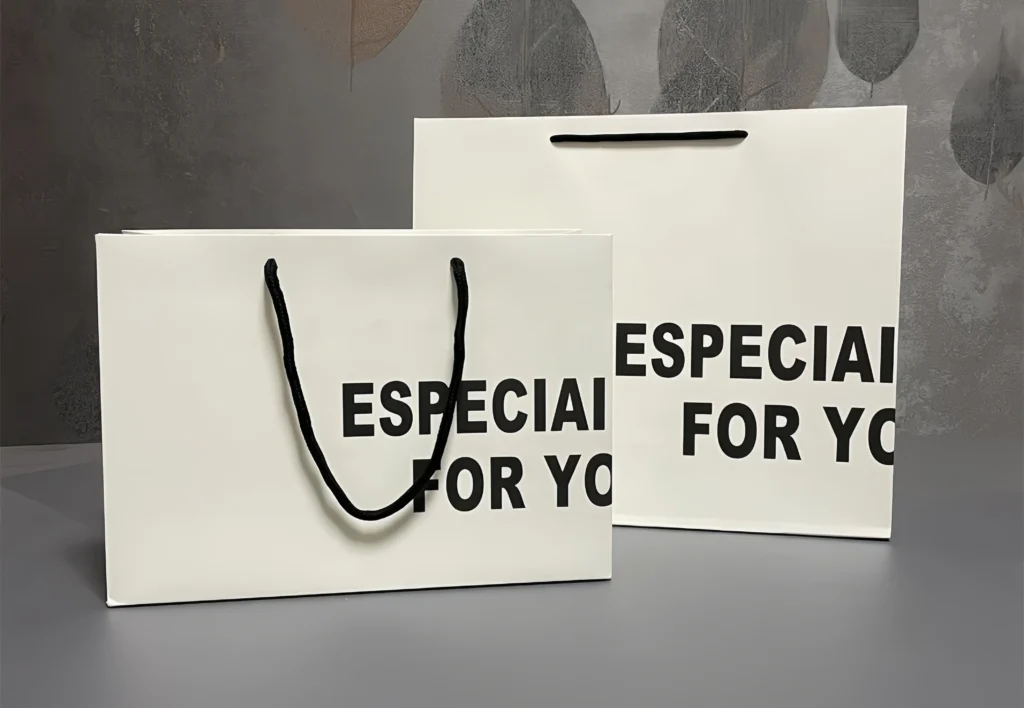
If carrying capacity is important to your business, testing the actual bag is recommended.A simple practical test is to place the products inside the finished bag and gradually increase the load.
Check:
- Handle attachment points
- Top edge
- Side folds
- Bottom
- Corners
- Overall bag shape
Do not test only an empty bag or rely entirely on the paper GSM.The most meaningful test is performed using the actual bag design and actual product type.For commercial packaging, professional packaging or load testing can also be considered when specific performance requirements apply.
Common Mistakes When Choosing a Strong Paper Bag
Choosing Paper Based Only on GSM.Higher GSM does not automatically mean the entire bag is stronger.
Ignoring the Handles.A strong paper bag can still fail if the handle attachment is weak.
Using an Oversized Bag.A bag that is much larger than necessary may experience additional stress when carrying heavy products.
Skipping Sample Testing.A design may look perfect on screen but behave differently when filled with real products.
Focusing Only on Appearance.Luxury finishes are important for branding, but structural design should come first when the bag needs to carry heavy products.
Conclusion
So, how much weight can a paper shopping bag hold?For many retail applications, 2–5 kg is a practical general range, while specially designed reinforced bags can be made for heavier loads.However, there is no single number that applies to every custom paper bag.
The final strength depends on the combination of:
- Paper material
- Paper GSM
- Bag dimensions
- Bottom construction
- Handle material
- Handle reinforcement
- Product weight
- Weight distribution
- Manufacturing quality
If you are ordering custom paper shopping bags, the best approach is to start with your product type, average product weight, and bag dimensions rather than choosing a paper GSM first.A professional packaging manufacturer can then recommend the appropriate paper, handle, bottom construction, and reinforcement based on your requirements.
At LucklinPak, we can help you develop custom paper shopping bags for different retail applications, including clothing, jewelry, cosmetics, gifts, and lifestyle products. If you know the bag size and the approximate weight it needs to carry, you can contact us to discuss a suitable structure and material.