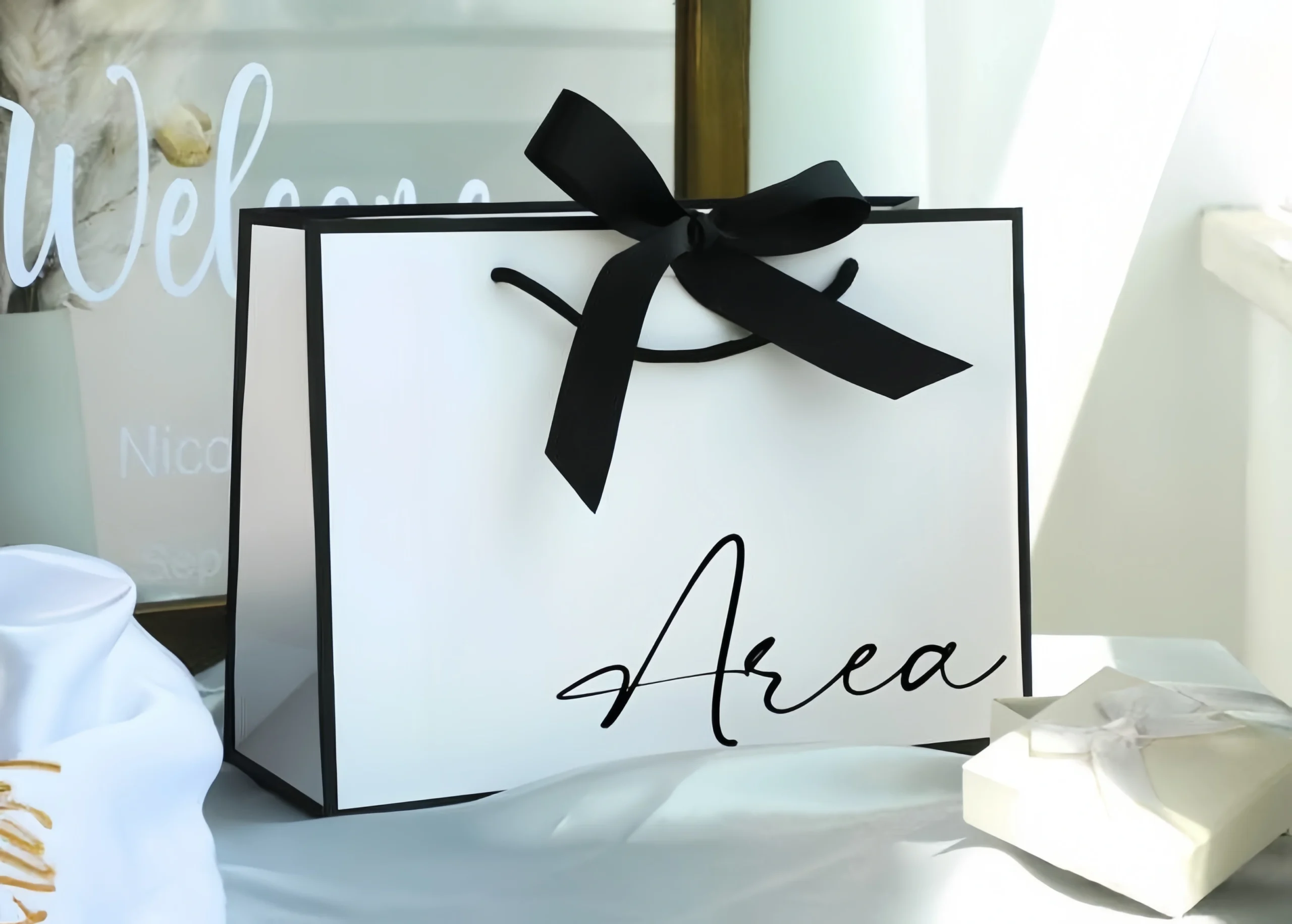
Choosing the right shopping bag size is more important than it may seem. A bag that is too small can be difficult to use, while a bag that is too large may waste paper, increase packaging costs, and leave products moving around inside.For retail brands, the right shopping bag should fit the products comfortably, support the required weight, and still look attractive when customers carry it out of the store. In this guide, we’ll look at standard custom shopping bag sizes, common dimensions, bag capacity, and how to choose the right size for different products.
If you are looking for a broader overview of paper bag types, materials, handles, printing, and customization, see our [Ultimate Guide to Shopping Bags]. For brands ready to order custom bags, you can also explore our [Custom Paper Bags] manufacturing service.
Why Shopping Bag Size Matters
Shopping bag size affects more than just appearance. It can influence the customer experience, product protection, material usage, and shipping efficiency.
A well-sized shopping bag should:
- Fit the product without excessive empty space
- Make products easy to place inside and remove
- Provide enough room for tissue paper or additional packaging
- Support the weight of the products
- Match the brand’s visual positioning
- Avoid unnecessary material and shipping volume
For example, a small jewelry box does not need the same size bag as a pair of shoes or a large clothing gift set.That is why there is no single “best” shopping bag size for every business.
Standard Custom Shopping Bag Sizes
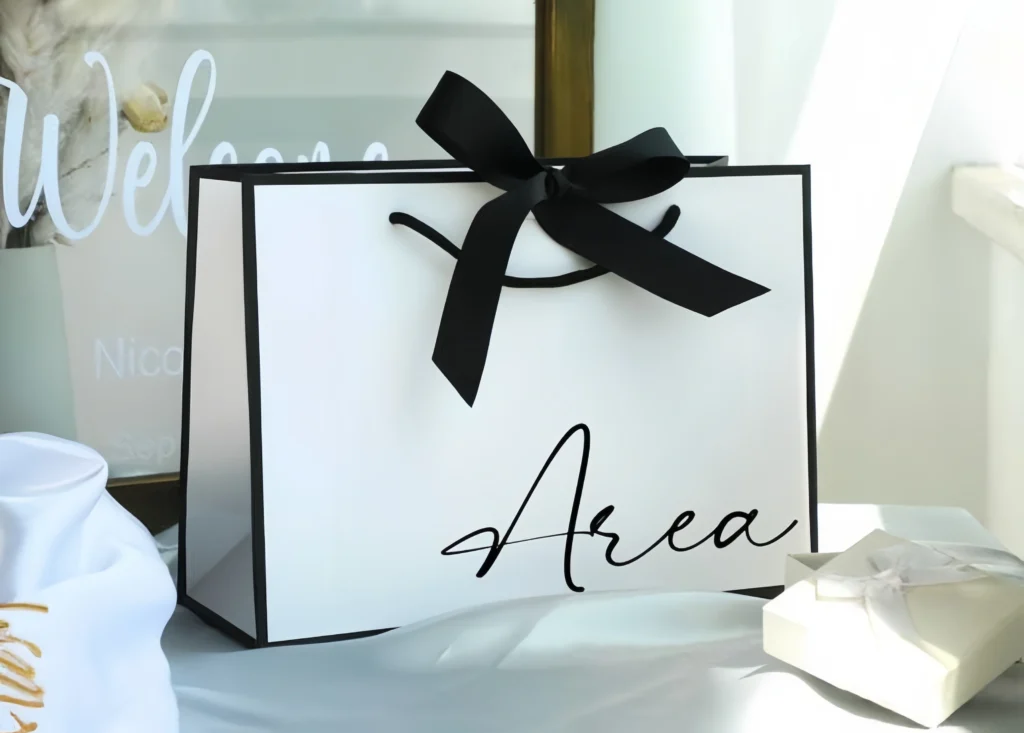
There is no universal standard size for custom shopping bags. However, several dimensions are commonly used as starting points for retail packaging.The following sizes can help you estimate which bag may be suitable for your products.
| Bag Size | Typical Dimensions | Suitable For | Typical Capacity |
|---|---|---|---|
| Small | 15 × 20 × 8 cm | Jewelry, small cosmetics, accessories, small gifts | 1–2 small items |
| Small/Medium | 18 × 23 × 10 cm | Skincare, candles, accessories, small gift sets | 1–3 small items |
| Medium | 25 × 30 × 12 cm | Clothing, cosmetics, skincare, gifts | 1–3 medium items |
| Medium/Large | 30 × 35 × 12 cm | Clothing, shoes, larger gift sets | Several medium-sized items |
| Large | 35 × 45 × 15 cm | Jackets, shoes, retail purchases, gift sets | Multiple items |
| Extra Large | 45 × 60 × 18 cm | Large gift sets, bulky products, multiple purchases | High-volume purchases |
These dimensions are only reference sizes. The actual capacity depends on the bag’s width, height, gusset depth, paper material, handle construction, and the weight and shape of the products.For custom packaging, the bag can usually be adjusted to fit your specific product dimensions.
Small Shopping Bags
Small shopping bags are commonly used for lightweight and compact products.
Typical applications include:
- Jewelry
- Watches
- Small cosmetics
- Skincare products
- Accessories
- Small candles
- Small gift items
For example, a bag around 15 × 20 × 8 cm may work well for a small jewelry box or several compact cosmetic products.A slightly larger size, such as 18 × 23 × 10 cm, provides more room for tissue paper and multiple small products.For luxury products, the bag should not be so large that the product looks lost inside. A closer fit usually creates a cleaner and more premium presentation.
Medium Shopping Bags
Medium shopping bags are among the most versatile options for retail packaging.
Common applications include:
- Clothing
- Skincare
- Cosmetics
- Shoes
- Accessories
- Gift sets
- Boutique purchases
Typical dimensions may range from approximately 25 × 30 × 12 cm to 30 × 35 × 12 cm.These sizes provide more flexibility when customers purchase several products together.For clothing brands, for example, a medium bag may accommodate a folded shirt, sweater, or several smaller apparel items. For cosmetics brands, it can work well for multiple skincare or beauty products.
Large Shopping Bags
Large shopping bags are designed for products that need more internal space.
Typical applications include:
- Jackets
- Shoes
- Larger clothing items
- Home goods
- Large gift sets
- Multiple retail purchases
Common reference sizes include 35 × 45 × 15 cm or larger.The gusset is particularly important for larger bags because it increases the available internal space and helps the bag stand more comfortably when filled.When choosing a large bag, don’t simply increase the height and width. Consider the product’s depth as well.
Extra Large Shopping Bags
Extra large shopping bags are generally used when customers need to carry multiple or bulky products.
Typical applications include:
- Large gift sets
- Clothing bundles
- Bulky retail products
- Home and lifestyle products
- Multiple purchases
Reference dimensions may include 45 × 60 × 18 cm or 50 × 65 × 20 cm.Because these bags can carry more weight, the handle attachment, paper thickness, reinforcement, and bottom construction become increasingly important.For heavy products, the bag should be designed based on the actual product weight rather than size alone.
Shopping Bag Capacity: How Much Can Each Size Hold?
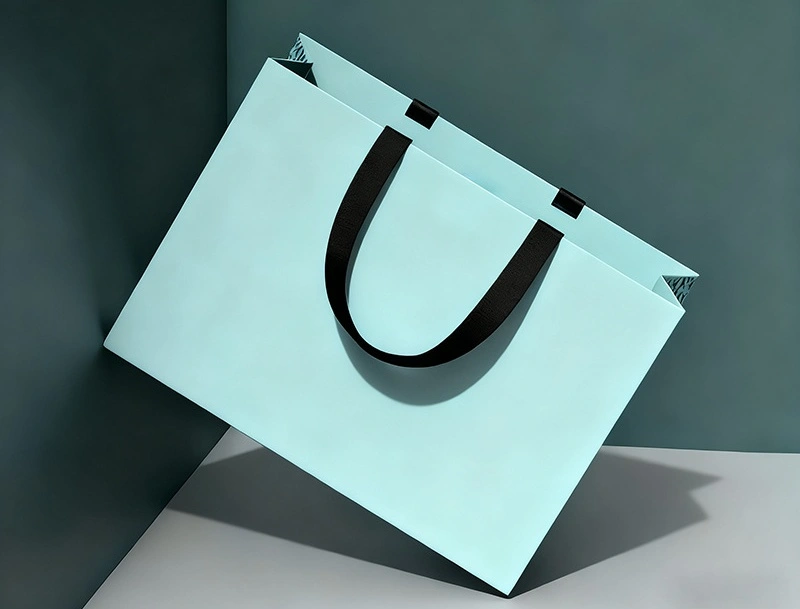
Bag dimensions tell you how large a bag is, but they do not tell the whole story.Two bags with similar height and width can have different capacities because of differences in:
- Gusset depth
- Product shape
- Paper thickness
- Handle construction
- Bottom reinforcement
- Product weight
- Internal packaging
For example, a 25 × 30 × 12 cm bag may hold several skincare products, but the actual capacity will depend on the size and packaging of each item.A 35 × 45 × 15 cm bag may be suitable for larger clothing purchases, but it may need stronger construction if the products are heavy.When estimating capacity, think about both volume and weight.A bag can have enough physical space for a product but still be unsuitable if the total weight is too high for the paper and handle construction.
How to Choose the Right Shopping Bag Size
Choosing the right bag size starts with the products rather than the bag itself.
1. Measure Your Product
Start by measuring the product or its retail packaging.
Record:
- Length
- Width
- Height
If the product is already packed inside a box, measure the finished product packaging, not just the product itself.This gives you a more accurate starting point for determining the bag dimensions.
2. Consider the Product Packaging
Products are rarely placed directly into a shopping bag.You may also use:
- Tissue paper
- Gift boxes
- Protective packaging
- Clothing folded inside packaging
- Multiple product boxes
Make sure the bag provides enough clearance for the complete packaged product.As a starting point, allow some additional space around the product so it can be placed into and removed from the bag comfortably.The exact amount of extra space depends on the product shape, packaging method, tissue paper, and gusset depth.
3. Consider How Many Items Customers Usually Buy
Think about the typical purchase rather than the largest possible order.
For example:
- Jewelry brand → usually 1–2 small boxes
- Skincare brand → several bottles or jars
- Clothing brand → one or several folded garments
- Gift shop → different combinations of gift products
- Bakery → boxes or food containers with specific dimensions
If most customers buy one or two products, you may not need a very large bag.
4. Consider Product Weight
Size and weight should always be considered together.A larger bag does not automatically mean it can safely carry heavier products.For heavier products, pay attention to:
- Paper GSM
- Handle material
- Handle attachment
- Reinforced top edge
- Bottom reinforcement
- Bag construction
For example, a bag designed for lightweight clothing may require a different construction from one designed for glass bottles or heavy gift boxes.
5. Consider the Gusset Depth
The gusset is the folded side or bottom section that creates additional space inside the bag.It is especially important for products with depth.A bag that is wide and tall but has a very narrow gusset may not fit a deep product comfortably.When selecting dimensions, consider the complete three-dimensional space:
Bag width × bag height × gusset depth
This is particularly important for gift boxes, shoes, candles, food packaging, and other products with significant depth.
Standard Size vs. Custom Size Shopping Bags
Standard and custom bag sizes can both work well. The better option depends on your products and order requirements.
| Factor | Standard Size | Custom Size |
|---|---|---|
| Fit | General fit | Product-specific fit |
| Flexibility | Limited | Highly flexible |
| Product range | Good for common products | Good for unique products |
| Production | Usually simpler | May require sampling |
| Cost | Often lower | May be higher |
| Best for | Common retail products | Special, premium, or unusual products |
Standard sizes are useful when your products already fit common packaging dimensions.Custom sizes are more suitable when you want a closer fit, have unusual product dimensions, or want to create a specific presentation.
Recommended Shopping Bag Sizing Strategy for Retail Brands
You do not necessarily need a different bag size for every product.For many retail brands, using two or three core shopping bag sizes can be a practical approach.For example:
Small
Use for:
- Jewelry
- Accessories
- Small cosmetics
- Small gift items
Medium
Use for:
- Skincare
- Cosmetics
- Clothing
- Medium gift sets
Large
Use for:
- Jackets
- Shoes
- Large gift sets
- Multiple purchases
Using a small number of carefully selected sizes can make packaging management easier while still covering most customer purchases.For brands with very different product categories, separate sizing strategies may make more sense. For example, a jewelry brand and a clothing brand will usually have very different packaging requirements.
How Bag Size Affects Cost and Shipping
Bag size can also influence packaging and shipping costs.In general, a larger bag may require:
- More paper
- More printing area
- More reinforcement
- More storage space
- More carton space during transportation
Larger folded bags can also occupy more space in shipping cartons, which may affect the overall shipping volume.However, the cheapest bag is not always the smallest bag.If a bag is too small, products may not fit properly. If it is too large, you may use unnecessary material and shipping space.The goal is to find a practical size that fits your products without excessive empty space.For a detailed explanation of pricing factors, see our guide to Custom Shopping Bags Cost in 2026.
How Bag Size Affects Sustainable Packaging
Choosing the right size can also support more efficient packaging.A properly sized bag can help reduce:
- Unnecessary paper usage
- Empty internal space
- Excessive packaging material
- Transportation volume
Instead of simply choosing the smallest possible bag, look for a size that provides a practical balance between product protection, usability, and material efficiency.For more information about sustainable paper bag materials and options, see our guide to Eco-Friendly Paper Bags.
Frequently Asked Questions
What Is the Most Common Shopping Bag Size?
There is no single standard shopping bag size because retail products vary widely.For many brands, medium-sized bags around 25 × 30 × 12 cm to 30 × 35 × 12 cm are versatile starting points for clothing, cosmetics, skincare, and gift products.The best size should always be based on the dimensions and weight of the products.
How Do I Choose the Right Shopping Bag Size?
Measure the length, width, and height of your finished product packaging first.Then consider additional space for tissue paper, multiple products, and comfortable product insertion and removal.Also check the gusset depth and total product weight.
How Much Can a Medium Shopping Bag Hold?
A medium bag such as 25 × 30 × 12 cm can typically hold several small or medium-sized retail products, but actual capacity depends on the size, shape, packaging, and weight of the products.There is no fixed number of products that every medium bag can safely hold.
Should I Use Standard or Custom Bag Sizes?
Standard sizes can be a good choice when your products fit common dimensions.
Custom sizes are better when your products have unusual dimensions or when you want a closer, more premium fit.
Can One Bag Size Work for Multiple Products?
Yes. Many brands use two or three core bag sizes to cover most of their product range.The key is to select sizes that can accommodate your most common product combinations without excessive empty space.
Does Bag Size Affect Shipping Costs?
Yes. Bag size can affect the amount of space required in shipping cartons and therefore the overall shipping volume.For large orders, optimizing bag dimensions and carton packing can help make transportation more efficient.
Conclusion
The right shopping bag size should be based on the products you sell, not simply on a commonly available bag dimension.
When choosing a custom shopping bag, consider:
- Product dimensions
- Finished packaging dimensions
- Number of products per purchase
- Product weight
- Gusset depth
- Handle construction
- Storage and shipping requirements
For many retail brands, two or three carefully selected bag sizes are enough to cover most customer purchases.If you need bags for a specific product, you can start with standard dimensions and adjust the width, height, or gusset to create a better fit.
Looking for custom shopping bags made to your product dimensions?
LucklinPak provides custom paper shopping bags with different paper materials, sizes, handles, printing, and finishing options. Contact us with your product dimensions and required quantity, and we can help recommend a suitable bag size.