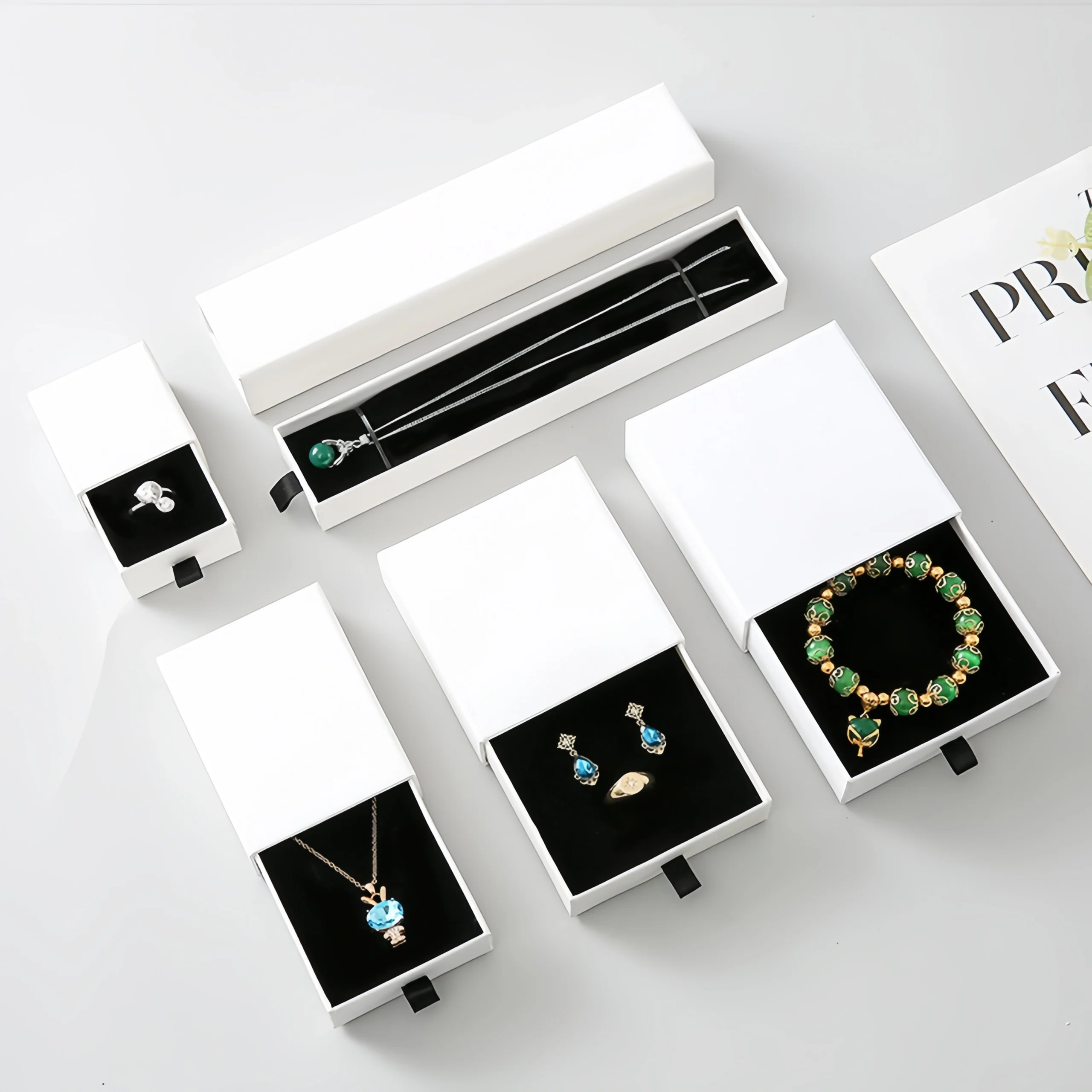
Custom drawer boxes are a practical packaging option for brands that want a neat presentation and a convenient sliding opening. However, choosing the right box involves more than selecting a design. You also need to consider the box structure, materials, dimensions, inserts, printing, and order quantity.
Before placing an order, it helps to understand how these details affect the finished packaging and overall cost. This guide covers the key points to discuss with a packaging supplier before starting your custom drawer box project.
This guide walks you through those decisions so you can discuss your requirements with a packaging supplier.
What Are Custom Drawer Boxes?
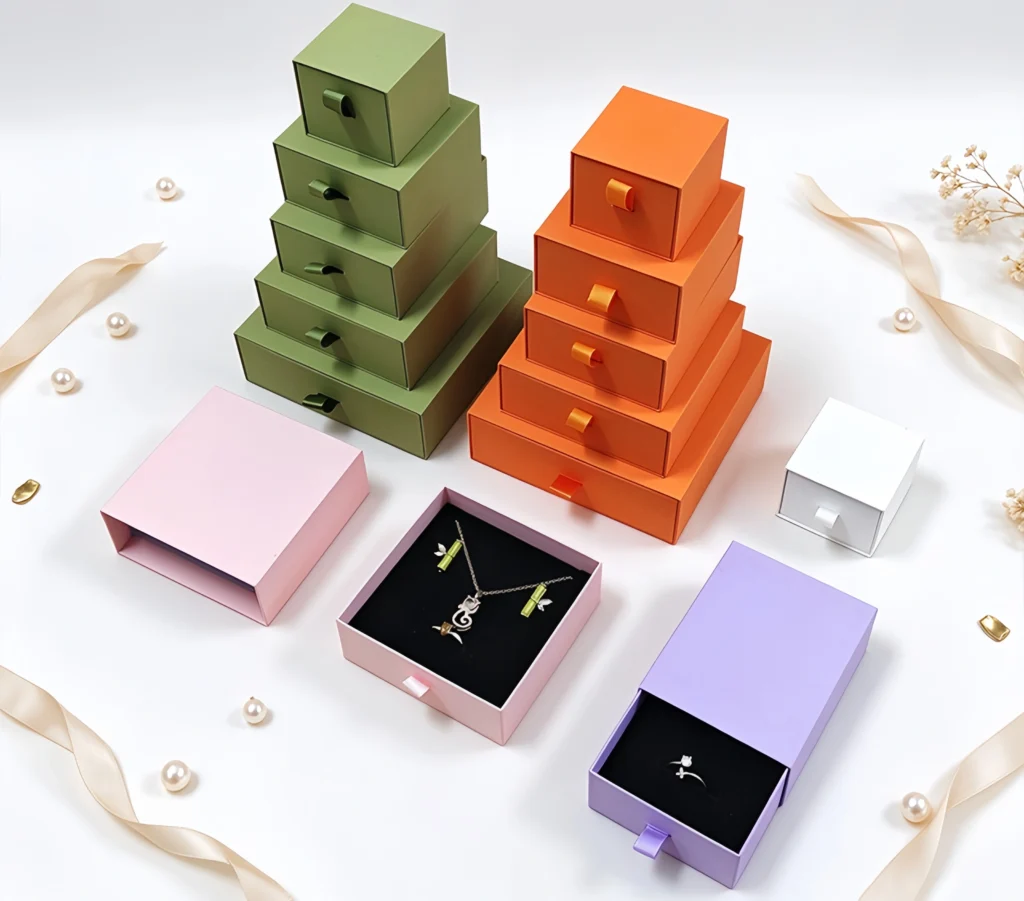
Custom drawer boxes are paper packaging boxes with two main parts: an outer sleeve and a sliding inner tray. Instead of lifting a lid, the customer pulls the tray out to reach the product.They are also called slide-out boxes or drawer-style packaging.
Depending on the design, a box may include:
- An insert to help hold the product in position.
- A ribbon pull or finger notch to make opening easier.
- Printed branding on the sleeve, tray, or inside surfaces.
- Separate compartments for products and accessories.
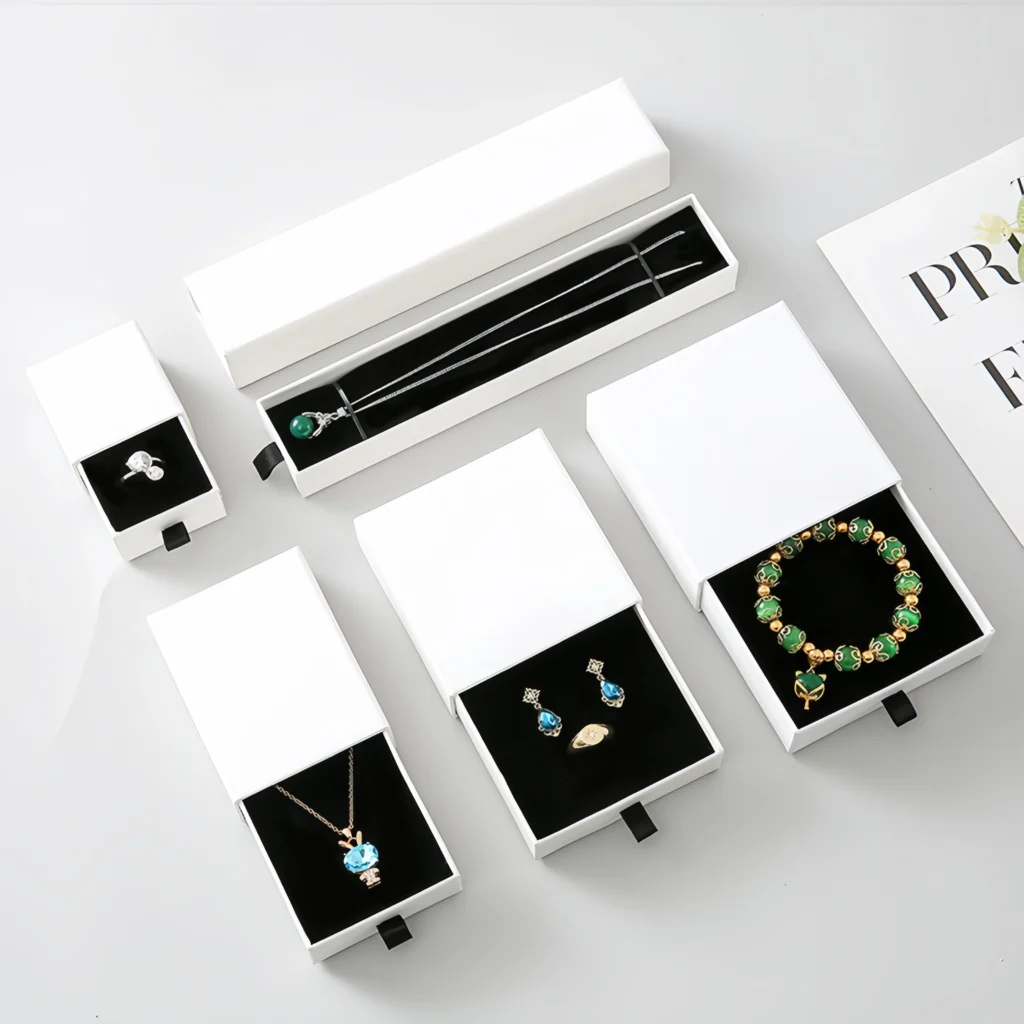
A jewelry box might have a fitted insert for a necklace and earrings, while a gift set might need compartments for several items. The structure should be planned around what goes inside.
Are Drawer Boxes Right for Your Product?
Drawer box packaging is worth considering if you want a sliding opening and a layout that presents your products neatly. Before choosing it, think about three things.
Product Fit and Access
Does the box hold one item or several? Does the product need an insert? Can the customer remove it easily?Small products may need a fitted insert, while a set of products may need separate compartments. The layout should keep everything organized without making the packaging awkward to use.
Brand Presentation
The outer sleeve gives you space for a logo, product information, and artwork. The tray and inside surfaces can also be part of the design.Think about what the customer will see as they open the box, not just how it looks when closed.
Storage and Delivery
Consider how the finished boxes will be stored, packed, and shipped. Ask for packing details and carton dimensions if warehouse space or freight cost is important to your project.If you sell online, confirm what outer shipping packaging is needed rather than assuming the presentation box alone meets your delivery requirements.
Drawer Boxes vs. Other Box Styles
Use the opening style as a starting point when comparing packaging options.
| Box Style | Opening Structure | What to Evaluate |
|---|---|---|
| Drawer box | A tray slides out of an outer sleeve | Sliding fit, product access, and insert layout |
| Magnetic gift box | A hinged lid with a magnetic closure | Lid operation, closure, and internal presentation |
| Two-piece rigid box | A separate lid and base | Lid fit, removal, and product presentation |
| Folding carton | A foldable paperboard structure | Assembly, product support, and storage requirements |
There is no need to choose by appearance alone. Compare samples and quotations based on your product, budget, and packing process. If you are comparing different rigid packaging styles, read our guide to magnetic gift boxes vs. rigid boxes to understand their structural differences and choose an option that suits your product.
How to Choose Materials for Custom Drawer Boxes
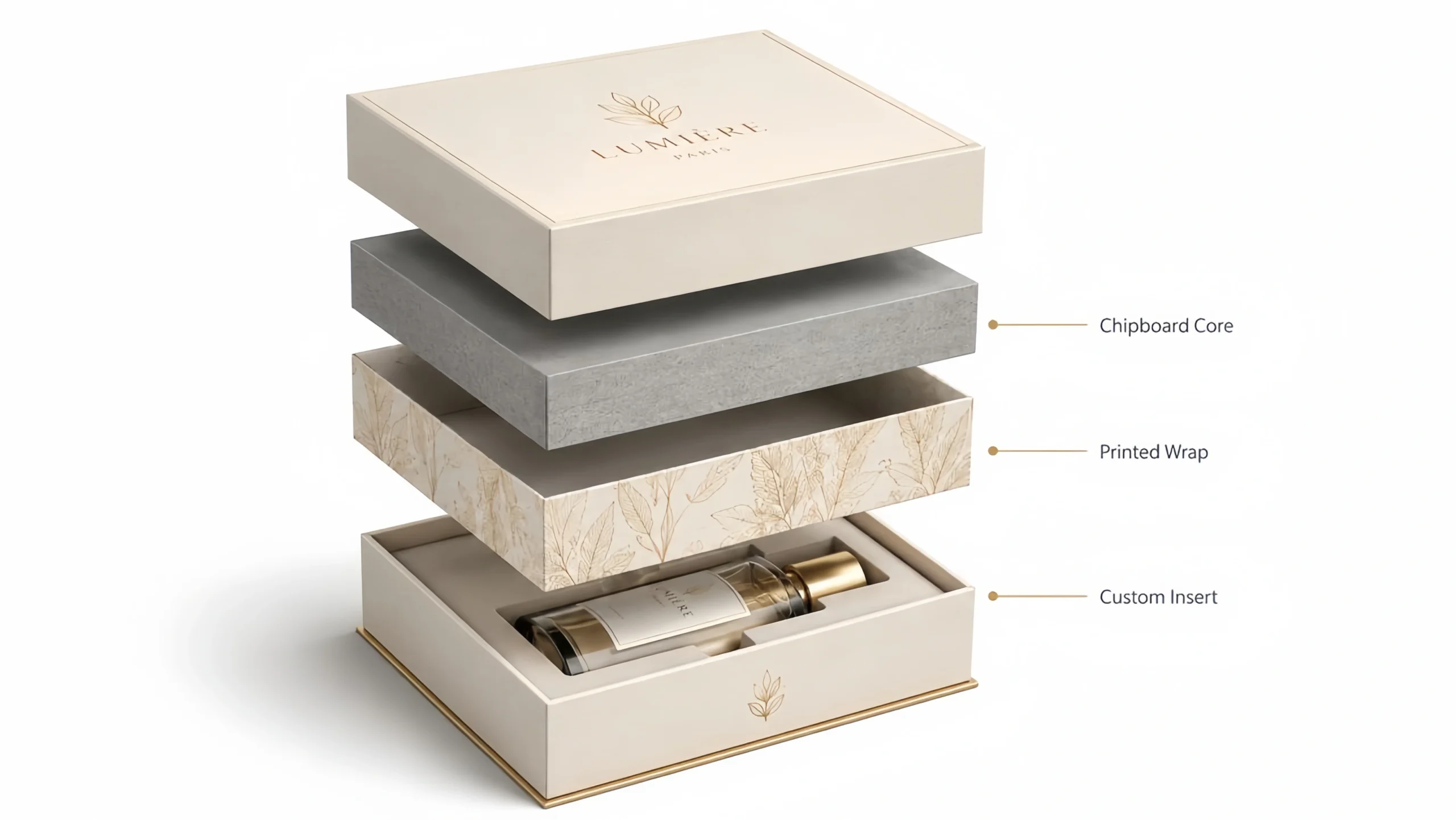
When discussing materials, separate the box’s structural board from the paper covering it. These serve different purposes and should be listed clearly in the quotation.
Core Board
The core board forms the main structure. Rigid drawer boxes commonly use greyboard covered with paper, while other constructions may use folding paperboard. For a closer look at rigid box construction, board thickness, wrapping papers, and insert materials, see our guide to rigid box materials and construction.
Ask the supplier to recommend a material and thickness based on the box dimensions, product weight, and design. Descriptions such as “thick board” or “premium material” are not specific enough for comparing quotations.
Before ordering, confirm:
- The board material and thickness.
- Which parts of the box use that specification.
- Whether the sample uses the proposed production materials.
Wrapping and Lining Papers
The covering paper affects the box’s color, texture, and printed appearance. Options may include coated, uncoated, kraft, or textured papers.You can use different papers for the outside and inside. For example, the sleeve could carry a printed design while the tray uses a plain matching color.
Ask to see physical paper samples where possible. Photos can help narrow down a choice, but you’ll still want to check the actual texture and appearance before approving it.
How to Get the Right Size and Insert
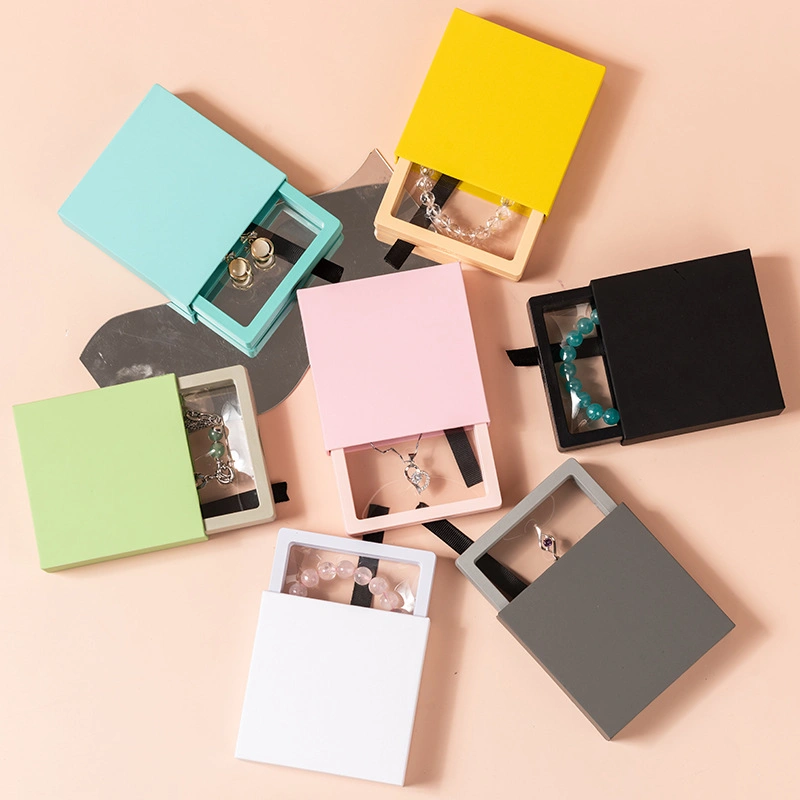
Start with the product, not an estimated box size.Give your supplier the product’s length, width, height, and weight, along with photos showing how it should sit in the tray. Include any bags, cards, instructions, or accessories that will go inside.For a set, provide the details of every item and a rough layout if you have one.
Internal vs. External Dimensions
Make sure both sides are using the same measurements:
- Internal dimensions describe the usable space inside the tray.
- External dimensions describe the overall size of the finished box.
The insert, board, covering paper, and space needed for the sliding structure all affect the final dimensions. Ask the supplier to confirm the measurements on a drawing or specification sheet.
Choosing an Insert
Custom drawer boxes with inserts can help organize products and limit movement inside the tray.
Ask which options suit your product and design. These may include:
- Paperboard inserts.
- Molded pulp inserts.
- Foam inserts, including EVA options offered by the supplier.
The insert should hold the product without making it difficult to remove. Check this with the actual product whenever possible, especially if it has an unusual shape or includes several components.
Printing, Finishes and Branding Options
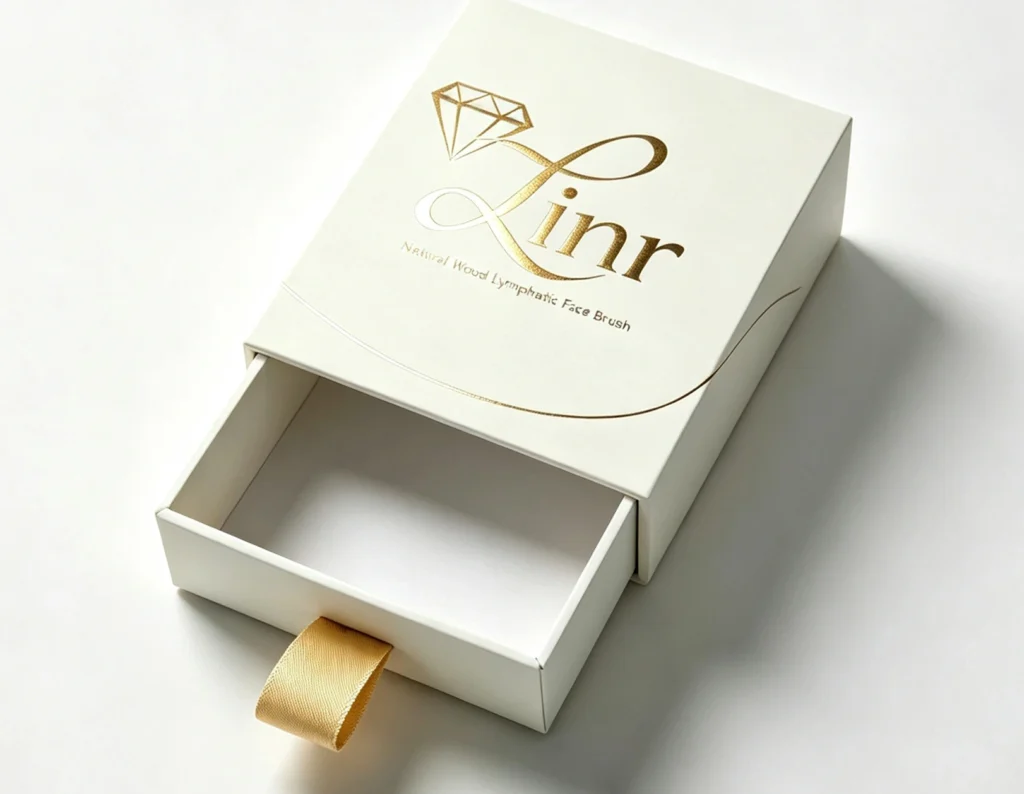
Once the structure and size are clear, decide where your branding should appear. Common areas include the outside of the sleeve, visible tray surfaces, and the inside of the box.You might choose a simple logo or a full printed design. Either way, confirm the artwork, colors, text, and placement before production.
For custom drawer boxes with logos, finishing options may include:
| Finish | Appearance |
|---|---|
| Matte lamination | A non-glossy surface |
| Gloss lamination | A shiny surface |
| Foil stamping | Metallic details on selected areas |
| Embossing | A raised design |
| Debossing | An indented design |
| Spot UV | Glossy details on selected areas |
Ask which finishes work with your chosen paper and artwork. Use physical samples to compare the effects before making a final choice. Opening details, such as ribbon pulls and finger notches, should also be included in the approved design. If you are exploring more premium packaging designs, our guide to luxury rigid boxes covers different design features, materials, and branding options.
How Much Do Custom Drawer Boxes Cost, and What Affects MOQ?
There is no useful one-price answer without a clear specification. Two boxes that look similar in a photo may use different materials, inserts, and finishes.
These are the main details to compare:
| Cost Factor | What to Confirm |
|---|---|
| Size and structure | Finished dimensions and construction |
| Materials | Board, covering paper, and lining |
| Printing | Printed surfaces, colors, and artwork versions |
| Finishes | Lamination, foil, embossing, or other details |
| Inserts and accessories | Material, layout, ribbon pulls, and other components |
| Quantity | Total quantity and quantity per size or design |
| Additional charges | Samples, packing, shipping, and any other exclusions |
Order quantity affects both the unit price and your total investment. A larger order may have a lower price per box, but it also means buying and storing more packaging.MOQ means minimum order quantity. Ask whether it applies to the total order or separately to each size, design, or SKU.When comparing quotations, give suppliers the same specifications and delivery requirements. A lower unit price is not necessarily a better offer if the insert, finishing, or shipping is missing from the quotation.
Sampling, Quality Checks and Production Lead Times
A sample gives you something physical to check before approving a bulk order. Ask what type of sample is being supplied and which details it represents.
Sample Types and Approval
A structural sample can help you review dimensions, layout, and opening function. For a printed or finished sample, confirm which materials, printing methods, and finishes are included.Do not assume every sample represents every detail of the final order.
Use the following checklist when reviewing it:
| Check | What to Look For |
|---|---|
| Dimensions and fit | The product, insert, and accessories fit as planned |
| Sliding function | The tray opens and closes smoothly |
| Product removal | The product can be taken out without difficulty |
| Printing | Text, logo placement, and colors match the agreed reference |
| Finish and workmanship | Surfaces, corners, wrapping, and finishes meet the agreed requirements |
| Packing | The packing method and outer-carton requirements are confirmed |
Record revisions in writing. Once everything is agreed, identify the approved sample and final specifications as the reference for production.
Production and Shipping Schedule
Ask for a schedule covering:
- Specification and artwork confirmation.
- Sample preparation and approval.
- Bulk production.
- Inspection and packing.
- Shipment.
Confirm when the production lead time starts and which approvals or payments are required first.Also check whether the quoted schedule includes shipping. If you have a launch date, give the supplier your required delivery date—not just the date you hope production will finish.
How to Choose a Drawer Box Supplier
Price matters, but you also need a supplier who can turn your requirements into clear, agreed specifications. If you are looking for customized rigid packaging, explore our custom rigid boxes to see the packaging solutions available for different products and brands.
When comparing a custom drawer box manufacturer or packaging supplier, ask:
- Can they explain the proposed structure and materials clearly?
- Can they review product dimensions and insert requirements?
- What sample options do they offer?
- Does the quotation list what is included and excluded?
- How are quality requirements confirmed before production?
- How will changes, delays, or production issues be communicated?
Keep the final dimensions, materials, artwork, packing requirements, and delivery terms in writing. This gives both sides a clear reference for the order.
What to Prepare Before Requesting a Quote
You do not need a finished packaging design to start a conversation. Product photos, dimensions, quantities, and a reference image are a useful starting point.
For a more detailed quotation, prepare the following:
| Information | What to Provide |
|---|---|
| Product | Name, photos, and intended use |
| Product dimensions | Length, width, height, and weight |
| Box requirements | Preferred structure and any known dimensions |
| Quantity | Total quantity and quantity per size or design |
| Insert | Whether one is needed and the preferred product layout |
| Artwork | Logo, design files, and color requirements |
| Finishes | Any requested surface treatments |
| Reference | Photos, drawings, or an existing sample |
| Delivery | Destination and required delivery date |
If you are unsure about a specification, say so. Ask the supplier to explain the proposed option, then confirm it before comparing final prices. You can also explore our custom boxes to learn more about the paper packaging options available for your brand.
Frequently Asked Questions
Can Different Sizes or Designs Be Combined in One Order?
Ask the supplier whether quantities can be combined across sizes or artwork versions. The quotation should show the MOQ and price for each version, along with any conditions for combining them.
Can I Request a Sample Before Bulk Production?
Ask which sample options are available, how much they cost, and how long they take. Confirm whether the sample uses the proposed production materials and finishes, and what it can be used to approve.
Are Custom Drawer Boxes Recyclable?
Recyclability depends on the complete packaging construction and local collection requirements. Ask the supplier to identify the materials used in the box, insert, coatings, and accessories, including any components that need to be separated.
Discuss Your Custom Drawer Box Project
Looking for custom drawer boxes for your products? LucklinPak provides custom paper packaging solutions for brands looking for practical and well-designed packaging.
Share your product dimensions, estimated quantity, logo, and reference images with our team. We can discuss suitable box structures, materials, inserts, printing options, and shipping arrangements based on your requirements.
Contact LucklinPak to discuss your custom drawer box project and request a quotation.