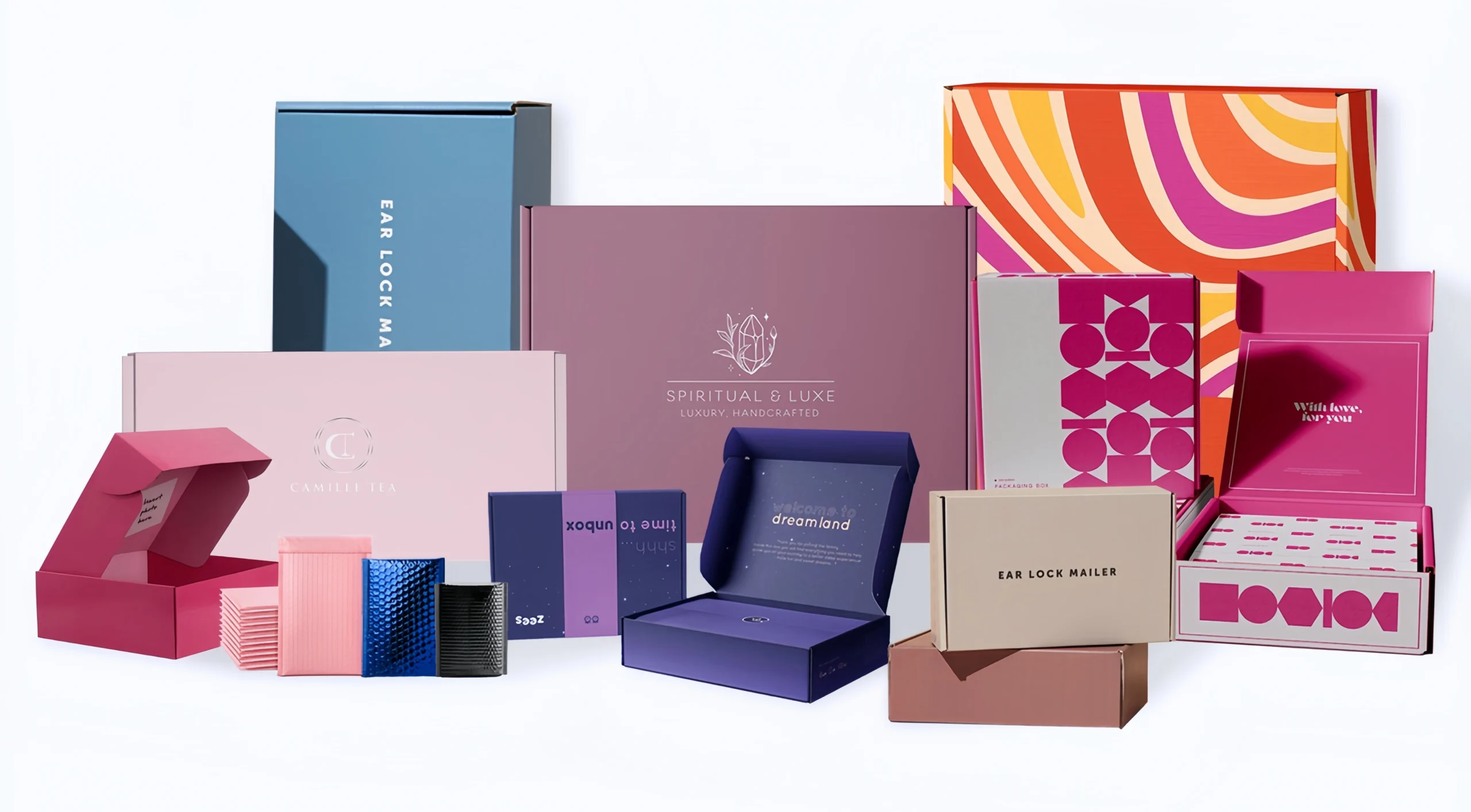
Choosing the right custom boxes depends on what you sell, how you want your packaging to look, and how your products will be delivered. Before placing an order, it is important to understand the different box styles, materials, printing options, sizes, and costs.
Custom packaging boxes do more than hold your products. They help protect items during shipping, make your brand look professional, and give customers a better experience when they receive their orders. Different products need different types of packaging. For example, folding cartons are often used for retail products, corrugated mailer boxes are suitable for shipping, and rigid boxes are a popular choice for luxury gifts and premium products.
In this guide, we will explain the common types of custom boxes, the materials used to make them, and the different ways you can customize your packaging. You will also learn what to consider when choosing the right box for your product, including size, material, printing, order quantity, and budget.
What You’ll Learn
- Custom boxes : what they include
- Box Types and Structures
- Packaging Materials Explained
- How to Match Packaging to Your Product
- Customization Options
- How to Choose the Right Solution
Custom Boxes: What They Include
When ordering custom boxes, there are several things to consider, including the box style, material, printing, finish, inserts, opening style, and order quantity. The right choice depends on what you are packaging, how much protection your product needs, and how you want your packaging to look.
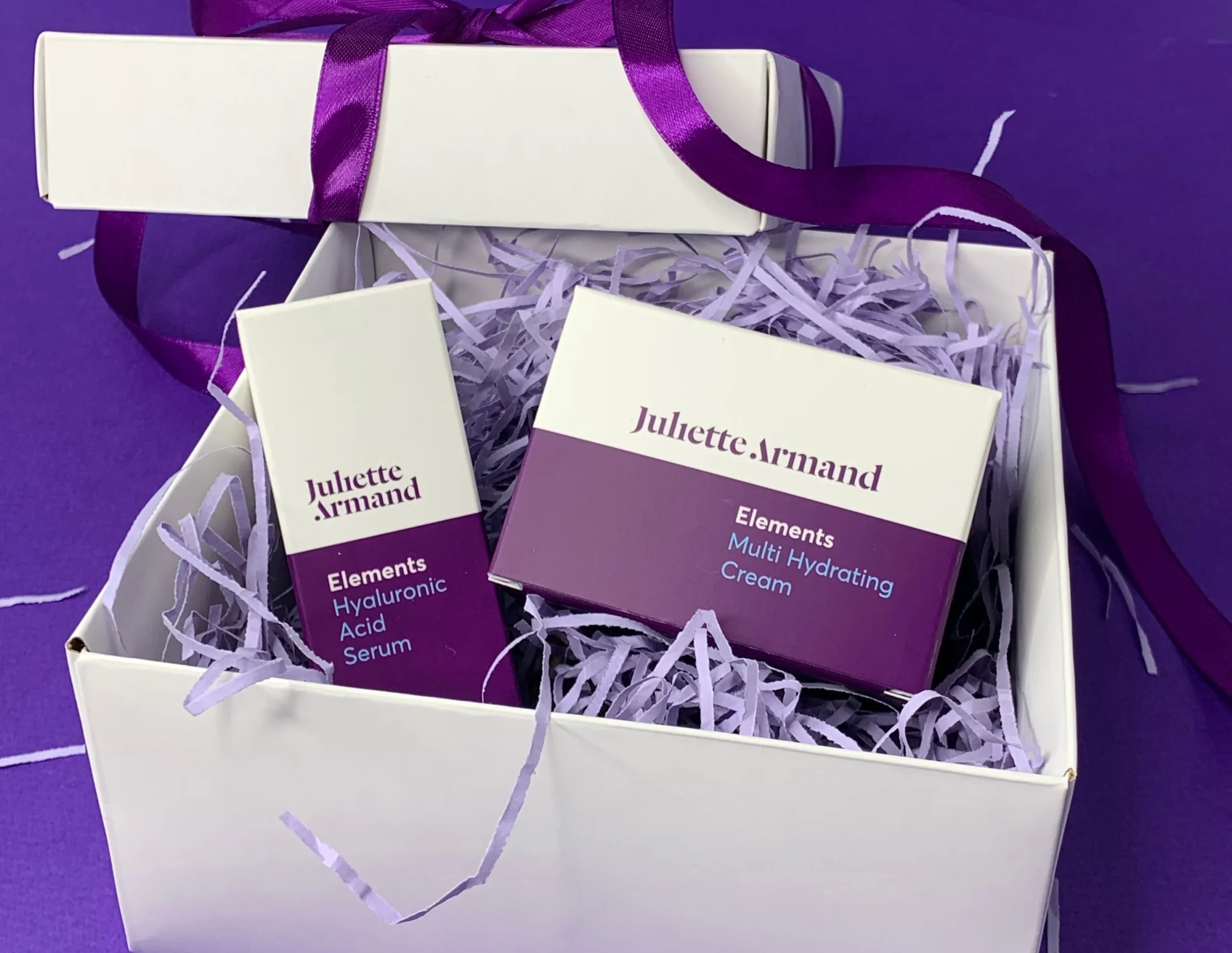
For example, a small cosmetic product can be packed in a printed folding carton. For online orders, a corrugated mailer box can provide better protection during shipping. If you are packaging luxury gifts or gift sets, a rigid box with a custom insert can make the product look more attractive and keep it in place.Each type of custom packaging has its own purpose. Choosing the right combination of box style, material, and design helps protect your products, show off your brand, and create a better experience for your customers.
Box Types and Structures
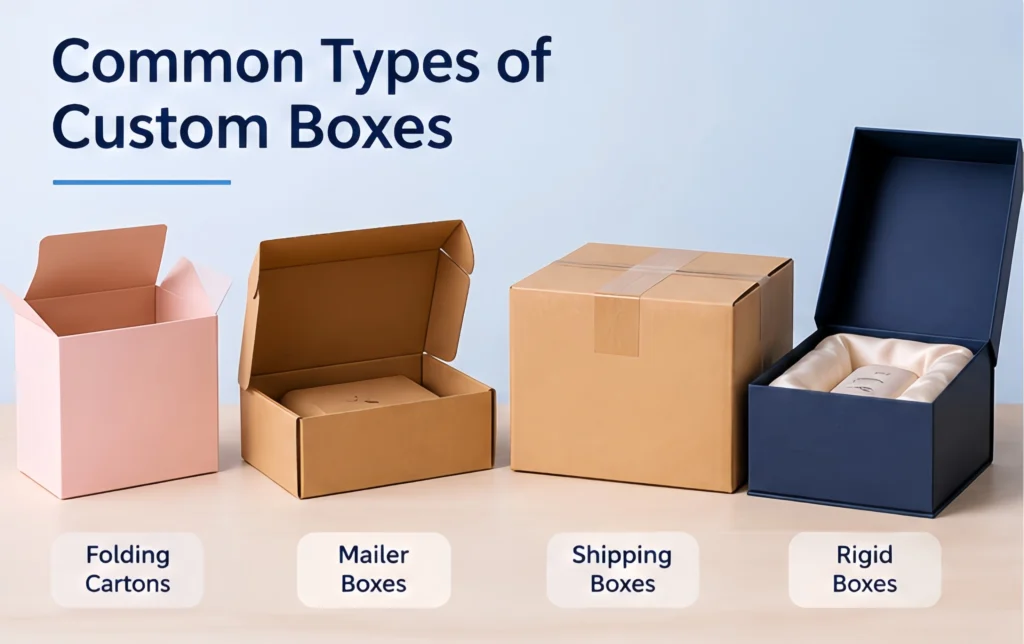
There are several common types of custom boxes, including folding cartons, corrugated mailer boxes, corrugated shipping boxes, and rigid boxes. Each type has a different structure and is designed for different products and uses. Some are better for retail displays, while others offer more protection during shipping or create a more premium look.
| Box Type | Structure | Common Uses | Main Features |
|---|---|---|---|
| Folding Carton | Made from paperboard that is cut, folded, and glued into shape | Cosmetics, food, clothing, and small retail products | Lightweight, easy to print, and shipped flat |
| Corrugated Mailer Box | Made from corrugated cardboard with a foldable, self-locking design | E-commerce orders, subscription boxes, apparel, and gifts | Stronger than regular paperboard and provides good shipping protection |
| Corrugated Shipping Box | Made from multiple layers of cardboard, including a wavy middle layer | Heavy products, bulk orders, and outer packaging | Strong, durable, and suitable for transportation |
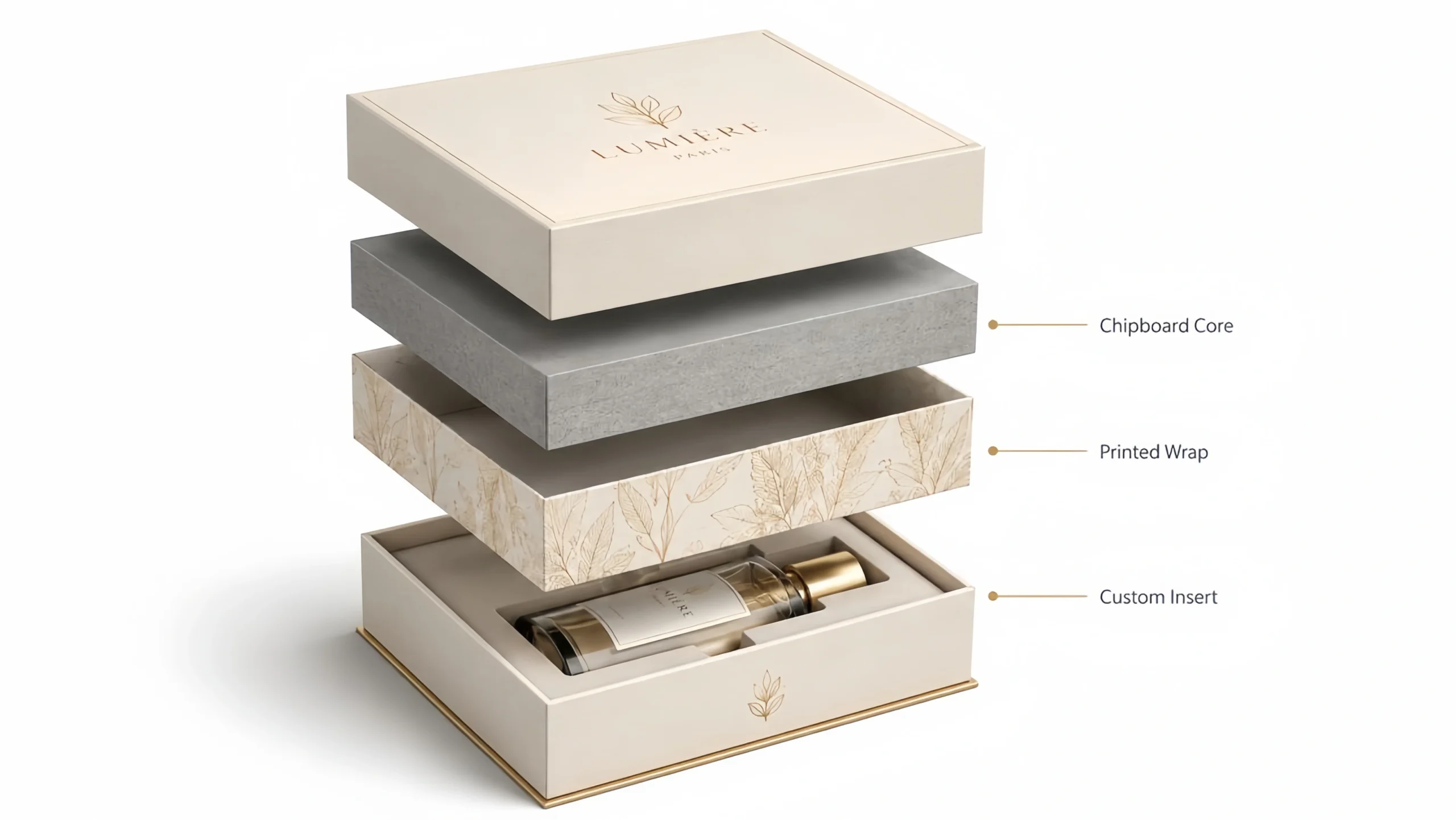
| Rigid Box | Made from thick greyboard wrapped with printed or decorative paper | Jewelry, electronics, luxury gifts, and gift sets | Sturdy, premium-looking, and keeps its shape |
Folding cartons are a popular choice for retail packaging because they are lightweight, easy to customize, and can be shipped flat to save storage space. Explore our range of custom folding cartons for different retail packaging needs.
Corrugated mailer boxes and shipping boxes are better suited for products that need extra protection during transportation. The wavy layer inside the cardboard helps absorb impacts and reduces the risk of damage.
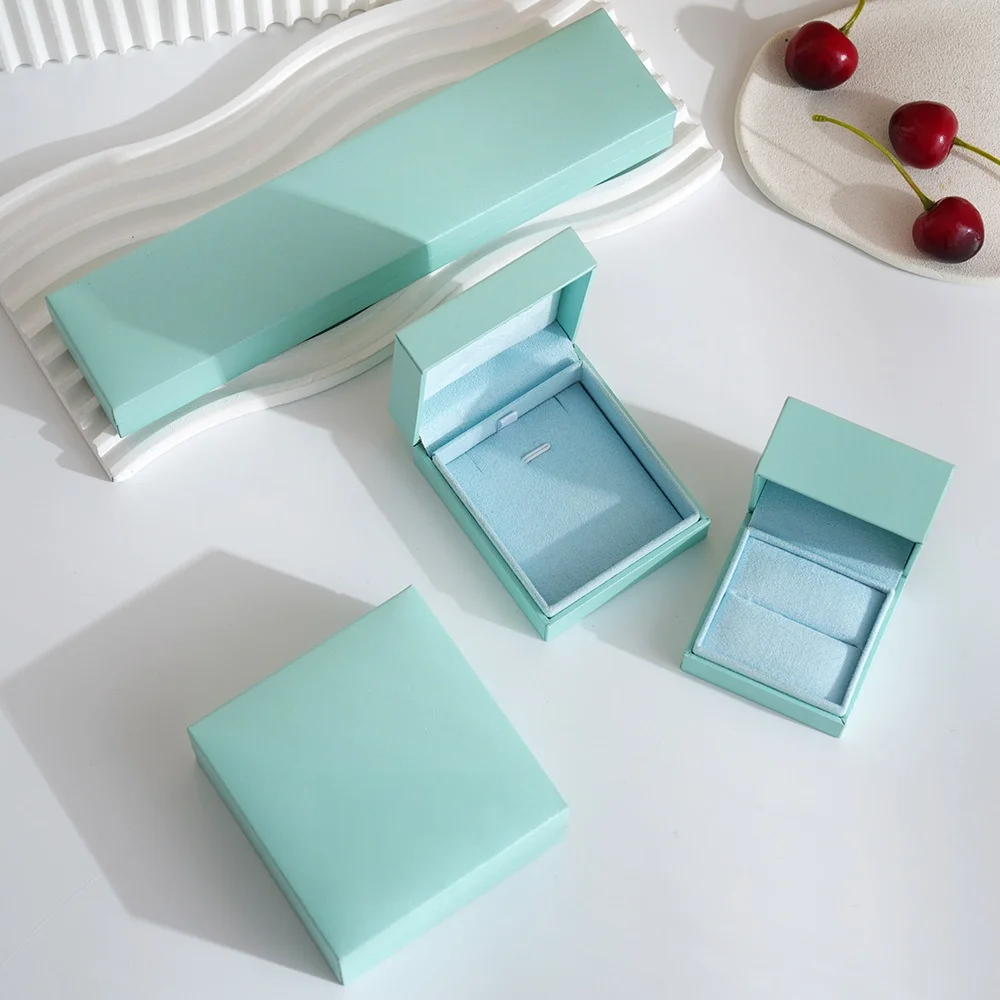
Rigid boxes are often used for luxury products and gift packaging. They offer a sturdy structure and a premium appearance, making them suitable for jewelry, cosmetics, and high-end gifts. Learn more about our custom rigid boxes for luxury packaging. They are thicker and stronger than regular folding cartons, giving products a more high-end look and feel. Unlike folding cartons, rigid boxes are usually delivered in their finished shape.d boxes use thicker board, remain assembled, and create a more substantial presentation.
Packaging Materials Explained
Choosing the right material is important when ordering custom boxes. It affects how strong the box is, how well it prints, how much it costs, and how your packaging looks and feels. Different materials are suitable for different products and packaging needs.
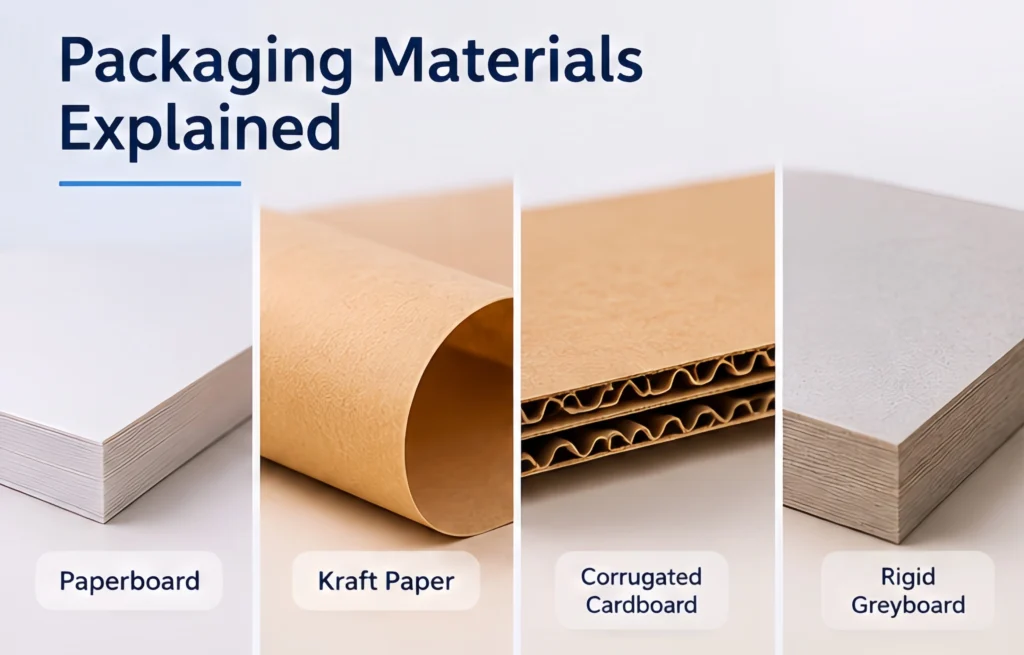
The most common materials used for custom packaging boxes include paperboard, kraft paper, corrugated cardboard, and rigid greyboard.
| Material | Advantages | Things to Consider | Common Uses |
|---|---|---|---|
| Paperboard | Lightweight, smooth surface, and great for printing logos and colorful designs | Not as strong as corrugated cardboard and offers limited protection from heavy impacts | Folding cartons, product boxes, and retail packaging |
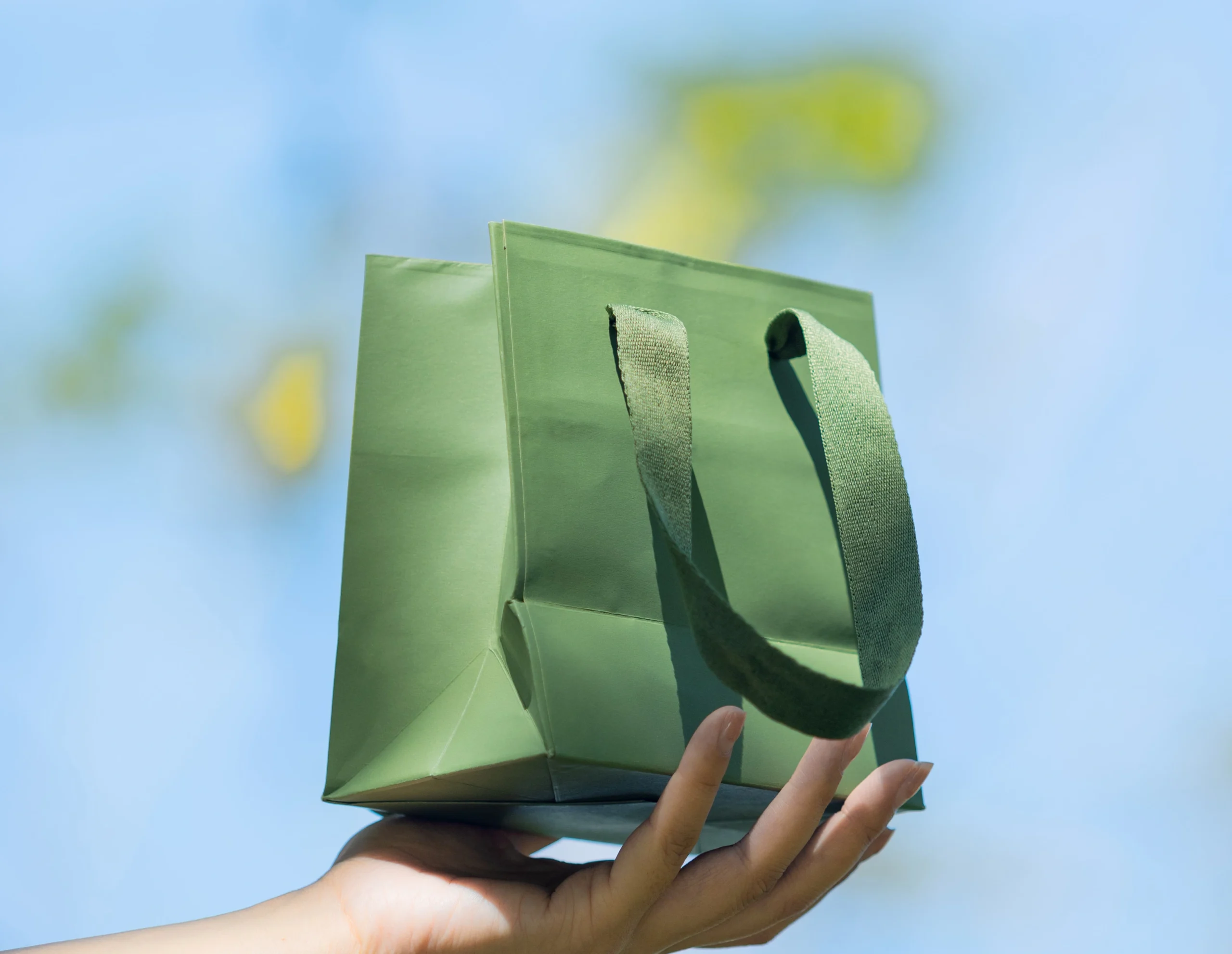
| Kraft Paper | Natural brown or white appearance, recyclable options, and a simple, clean look | Printing colors may look different from those on coated paper | Eco-friendly packaging, paper bags, and mailers |
| Corrugated Cardboard | Strong, lightweight, and provides good protection during shipping | Thicker and less suitable for a smooth, luxury-style finish | Corrugated mailer boxes, shipping boxes, and outer cartons |
| Rigid Greyboard | Thick, strong, and keeps its shape, making it suitable for premium packaging | More expensive and takes up more storage space | Rigid gift boxes, jewelry boxes, and luxury packaging |
One important difference is how these materials are made. Paperboard has a smooth surface and is commonly used for printed retail boxes. The printing method also affects the final appearance of your packaging. Learn more about CMYK printing for packaging and how different color systems work. Corrugated cardboard has a wavy layer between flat sheets of paper, which makes it stronger and helps protect products during shipping.
Kraft paper is a popular choice for brands that prefer a natural look, while rigid greyboard is used when a stronger box with a more premium appearance is needed.The best material depends on your product, budget, packaging design, and how the box will be used.
How to Match Packaging to Your Product
Before choosing a custom box, think about the product you want to pack. Consider its size, weight, shape, and whether it needs extra protection. You should also think about how the product will be sold or delivered. A box for a retail store may be different from one used for online orders or gift packaging.
Here are some important things to consider when choosing custom packaging boxes:
- Product size and weight: Measure the length, width, and height of your product, and check its weight before choosing a box.
- Product type: Think about whether your product is fragile, heavy, small, or has several separate parts.
- Space inside the box: Make sure there is enough room for the product, inserts, tissue paper, or protective materials.
- Purpose of the packaging: Decide whether the box is for displaying products in stores, packing products for customers, or protecting items during shipping.
- Sales channel: Consider whether your products will be sold in retail stores, through an online shop, in subscription boxes, or as gifts.
- Branding and design: Choose a box style, color, and printing design that match your brand and give customers a good first impression.
For fragile products, choose a strong corrugated box and add suitable inserts or cushioning to keep the items from moving around during shipping. For heavier products, use stronger cardboard that can support the weight without bending or breaking.
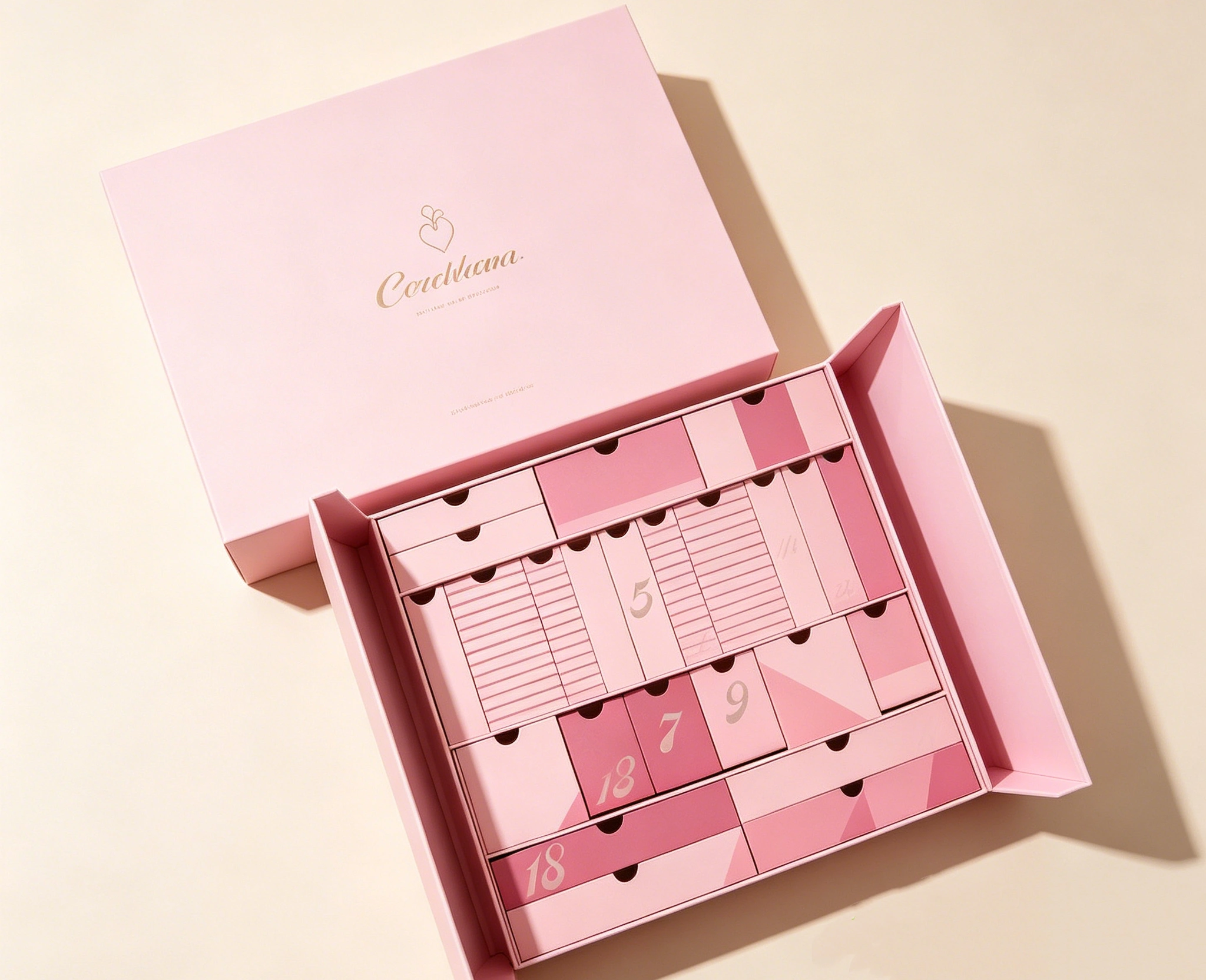
If you are packaging several items together, such as a skincare set or gift set, custom inserts can help keep each item in place. Explore our cosmetic packaging solutions for more ideas.The goal is to choose custom boxes that fit your products properly, provide enough protection, and look good without adding unnecessary packaging costs.
Customization Options
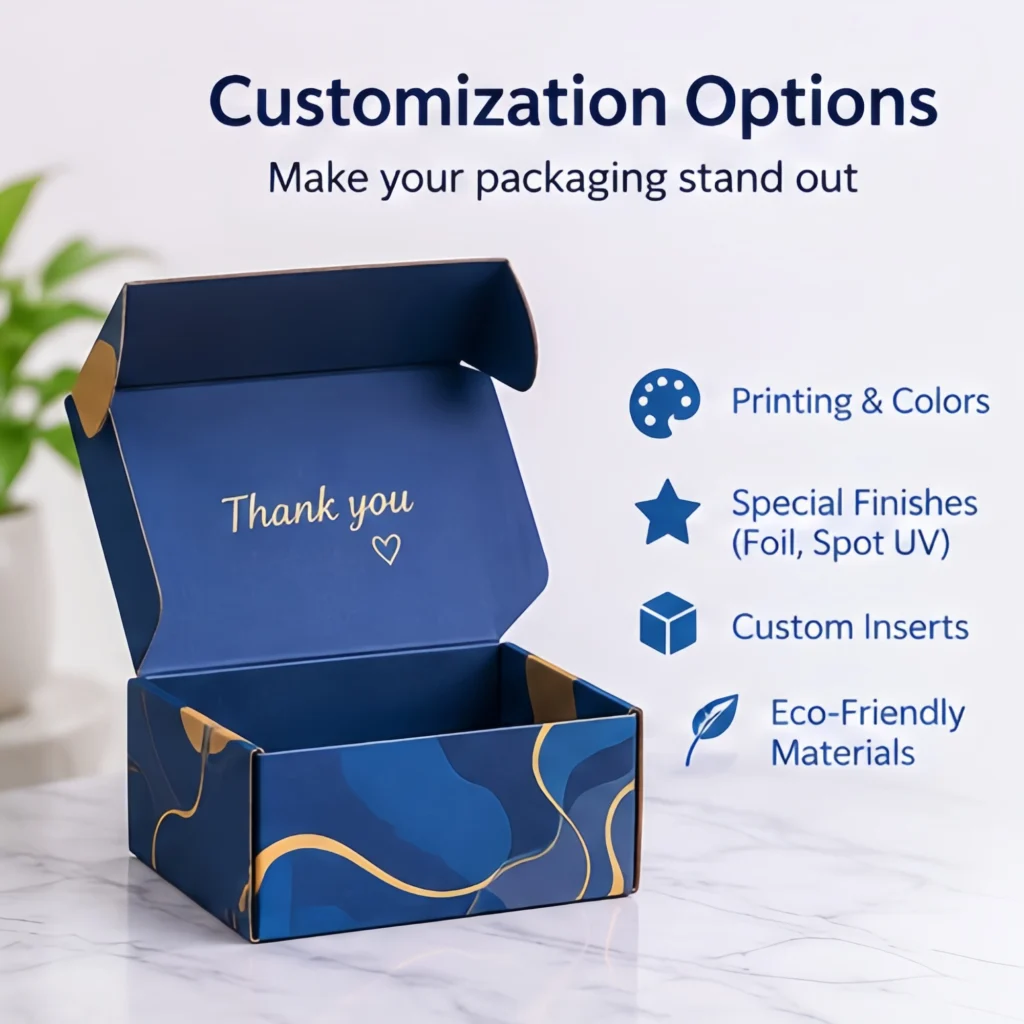
Customizing a box is about more than just adding your company logo. You can choose the box size, shape, material, printing, colors, and finishing options to create packaging that matches your product and brand.
There are many ways to customize custom boxes, depending on your needs and budget.The Common customization options include:
- Custom Sizes and Shapes: Choose the length, width, and height you need. You can also create different box shapes to fit your products.
- Custom Printing: Add your logo, brand name, product information, images, or patterns to the outside or inside of the box.
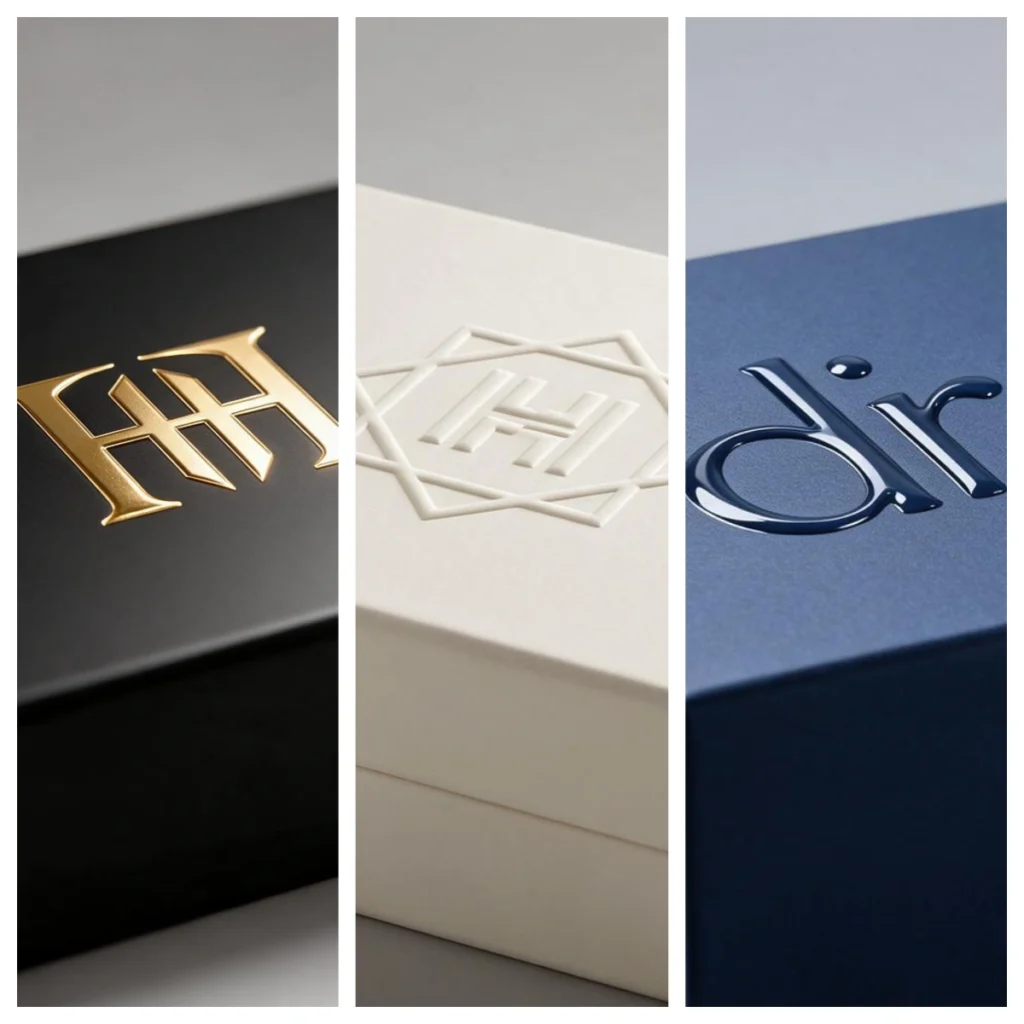
- Surface Finishes: You can also use special printing effects such as foil stamping, embossing, and spot UV to highlight your brand logo.
- Special Printing Effects: Use foil stamping, embossing, debossing, or spot UV to highlight your logo or specific design details.
- Custom Inserts: Add paper inserts, dividers, trays, or foam inserts to keep products in place and prevent them from moving inside the box.
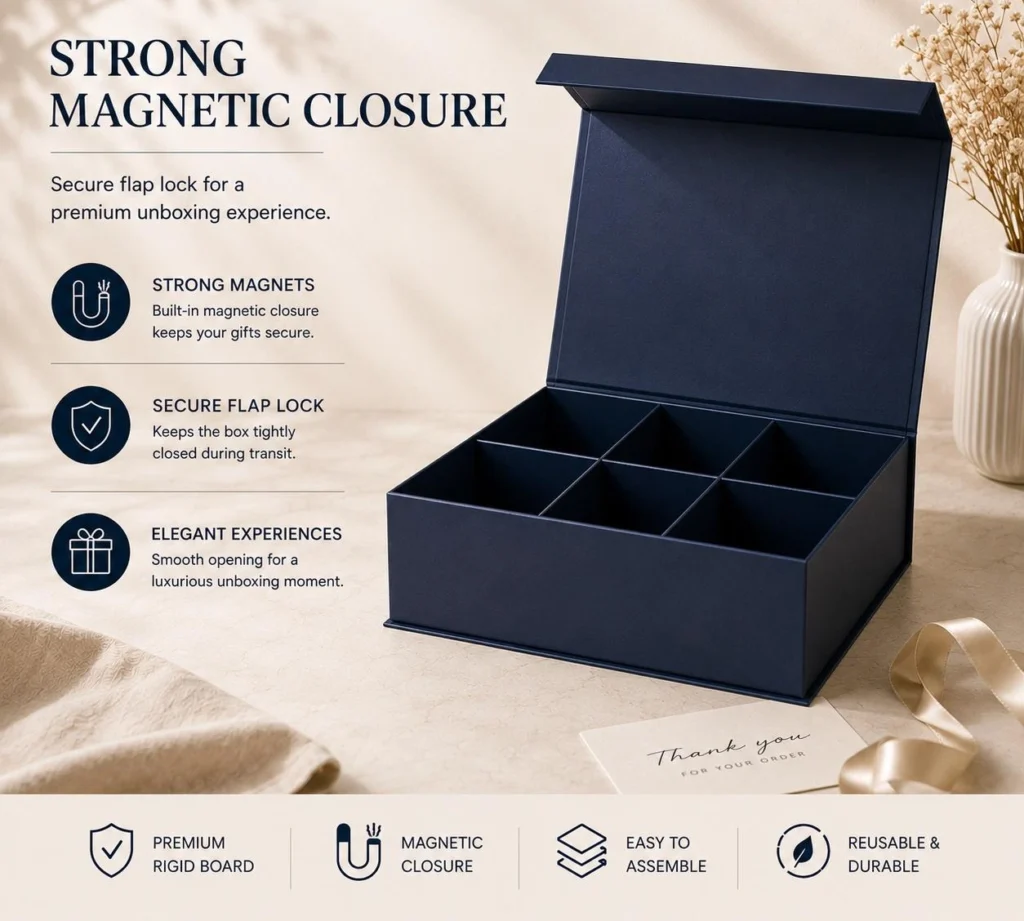
- Additional Features: Add clear windows, handles, sleeves, or magnetic closures to make your packaging more practical and attractive.
- Eco-Friendly Materials: Choose recycled paper, recyclable materials, or responsibly sourced paper for your packaging.
The best customization options depend on the type of product and how you plan to use the box. For example, a folding carton is a good choice for retail products that need printed product information and attractive designs. A rigid box with a magnetic closure or custom insert is more suitable for luxury gifts, jewelry, and gift sets.
By choosing the right size, material, printing, and finishing options, you can create custom packaging boxes that protect your products and help your brand stand out.
How to Choose the Right Solution
There is no single best custom box for every product. The right choice depends on what you are packing, how much protection your product needs, how you want the packaging to look, and how much you want to spend. Not sure whether to choose a rigid box or a folding carton? Read our guide to rigid box vs folding carton to understand their key differences.
Here are some simple suggestions to help you choose the right custom packaging boxes:
| What You Need | Recommended Box Type |
|---|---|
| Attractive packaging for retail stores | Folding carton or printed paperboard box |
| Packaging for online orders | Corrugated mailer box or shipping box |
| A luxury look for gifts or premium products | Rigid box with a custom insert |
| Extra protection for heavy or fragile products | Strong corrugated shipping box with protective inserts |
| Affordable packaging with your brand logo | Kraft paper box or paperboard box with simple printing |
| Accurate brand colors | CMYK printing or Pantone color printing |
Before asking for a quote, it is helpful to prepare some basic information about your packaging project:
- Product Size: The length, width, and height of the product.
- Product Weight: How heavy the product is.
- Box Style: The type of box you prefer, if you already have one in mind.
- Material and Inserts: Whether you need special materials, dividers, or protective inserts.
- Order Quantity: How many boxes you need.
- Artwork and Logo: Your logo or packaging design, if available.
- Delivery Address: Where the boxes need to be delivered and whether you need door-to-door shipping.
With these details, a packaging supplier can recommend suitable custom boxes, materials, and printing options for your project. It also makes it easier to get an accurate price and production schedule.
If you are not sure which box style or material to choose, you can share your product details with us. We can help you find a suitable packaging solution based on your product, quantity, and budget.
FAQs
1. What are custom boxes?
Custom boxes are packaging boxes made to fit your product and brand. You can choose the size, shape, material, printing, and finishing options to create packaging that meets your needs. They are commonly used for retail products, gifts, cosmetics, clothing, jewelry, and e-commerce orders.
2. What are the different types of custom boxes?
There are several common types of custom boxes, including folding cartons, corrugated mailer boxes, corrugated shipping boxes, and rigid boxes. Folding cartons are popular for retail products, corrugated boxes provide better protection during shipping, and rigid boxes are often used for luxury gifts and premium products.
3. What materials are used to make custom packaging boxes?
Common materials include paperboard, kraft paper, corrugated cardboard, and rigid greyboard. Paperboard is suitable for lightweight retail boxes, kraft paper offers a natural look, corrugated cardboard provides extra protection for shipping, and rigid greyboard is commonly used for luxury gift boxes.
4. How do I choose the right size for custom boxes?
Start by measuring your product’s length, width, and height. Then allow enough extra space for inserts, tissue paper, or protective materials if needed. The box should fit your product properly without being too tight or leaving too much empty space.
5. Can I print my logo and design on custom boxes?
Yes. You can add your company logo, brand colors, product information, and other designs to your custom boxes. Common printing options include CMYK and Pantone printing. You can also choose finishes such as matte lamination, gloss lamination, foil stamping, embossing, and spot UV to make your packaging look more attractive.
6. What is the minimum order quantity (MOQ) for custom boxes?
The MOQ depends on the box type, material, size, and printing requirements. At LucklinPak, our standard MOQ for most custom paper boxes is 500 pieces per size and design. For some stock boxes with a custom logo, smaller quantities may be available.
7. How much do custom boxes cost?
The price of custom boxes depends on several factors, including box size, material, printing, finishing, order quantity, and delivery location. Larger boxes, special finishes, and custom inserts may increase the cost. To get an accurate quote, provide your box dimensions, design, quantity, and delivery address.
8. How long does it take to produce custom boxes?
Production time depends on the box style, order quantity, and design requirements. For most custom paper boxes, mass production usually takes around 15–20 working days after the design and sample are approved. More complex rigid boxes may take longer. Shipping time depends on the delivery method and destination.
Final Thoughts
Choosing the right custom boxes starts with understanding your product and what kind of packaging it needs. Think about the box style, material, size, protection, printing, and order quantity before making your decision. The right packaging should keep your products safe, look good, and fit your budget.
In the following sections, we will take a closer look at different box types, materials, and customization options. This will help you understand how to choose and design custom packaging boxes that work well for your products and match your brand.
Ready to Create Your Custom Boxes?
Looking for custom packaging boxes that fit your products and brand? Contact LucklinPak today. We can help you choose the right box style, materials, printing, and finishing options to create packaging that meets your needs and budget.
Get in touch with us today for a custom quote and let’s bring your packaging ideas to life!