When it comes to custom paper bags, size is always the most critical—and easiest to get wrong—aspect. The right size ensures your product fits snugly and securely, presenting a refined and premium look. The wrong size, however, can result in products that don’t fit, empty-looking bags that feel cheap, and even increased costs and shipping fees.
This article will guide you from the basics of measuring your products, to determining the appropriate size for different scenarios, and finally to common mistakes and professional tips. Whether you are a brand owner, store manager, or someone new to packaging, this guide will help you confidently choose the right paper bag size without mistakes or wasted resources.
1. Why Paper Bag Size Matters
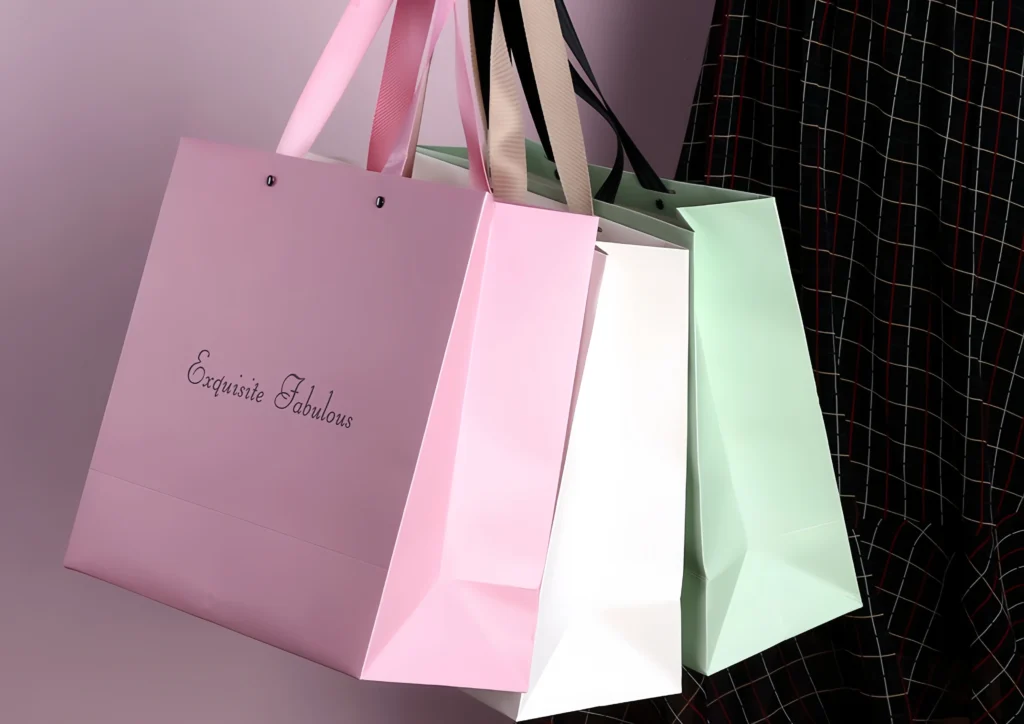
Many people think of paper bags as simply “something to hold products” and assume any size will do. In reality, the size of a paper bag directly affects product protection, brand presentation, cost efficiency, and customer experience.
First, an improper size can compromise product safety. A bag that is too tight may crush or deform items, while a bag that is too loose allows the products to move around, which is especially problematic for gift boxes, wine bottles, and delicate glassware.Second, size contributes to brand image. A well-proportioned bag makes the overall presentation look polished. Whether a customer is carrying it out of the store or you are using it for marketing photos, it conveys professionalism and a premium feel.Third, size affects long-term costs. Larger bags require more material, which increases unit cost, and poorly sized bags may expand the overall shipping volume, raising delivery fees. Over time, especially with bulk orders, these small differences can add up significantly.Finally, size impacts customer experience. A bag that fits perfectly is visually appealing and ergonomically comfortable to carry, enhancing the perceived value of your brand in subtle but meaningful ways.
2. Basic Measurements You Must Know Before Choosing Size
The first step in choosing the right bag size is to measure your product accurately. Many clients provide only approximate dimensions, making it difficult for suppliers to produce correctly sized bags.
The three key dimensions to record are:
- Length (L): The longest side of the product.
- Width/Depth (W): The thickness or the side-to-side measurement of the product.
- Height (H): The vertical distance from the bottom to the top of the product.
Tips for accurate measurement:
- Use a rigid ruler or metal tape measure; avoid flexible tapes that can bend and introduce errors.
- For curved or irregularly shaped products, measure at the widest points and record multiple values to ensure the maximum is captured.
- For gift boxes or products with reinforced layers, measure the outer dimensions, including any cardboard or covering.
- Measure the product in its final state (e.g., folded clothes, boxes with inner trays), and record to millimeter or 0.1 cm precision for supplier calculations.
Product shape matters:
- Cubes/rectangular boxes: base length and width are straightforward.
- Flat boxes (e.g., jewelry or mask boxes): thickness and longest side are key.
- Cylindrical products: use diameter plus height to determine base width and side circumference.
- Soft goods (clothing, fabric): account for compression and natural thickness changes.
Include extra materials:
If your product includes padding, trays, instruction sheets, dust bags, silk, or wood wool, be sure to add these to the measurements. For products with inserts or internal dividers, measure their maximum thickness and height and include them.
Leave a safety margin:
- Typically, leave 1–2 cm extra for length and height to ensure smooth placement and removal.
- For heavier or rigid items, add an additional 0.5–1 cm “buffer space.”
Too tight, and the bag may deform or be hard to insert items into; too loose, and it looks cheap and unstable. Proper allowance protects the product while maintaining a premium look and feel. Before full-scale production, consider producing a small sample to test placement, carrying, and shipping vibrations.
3. Common Paper Bag Sizes and What They Fit
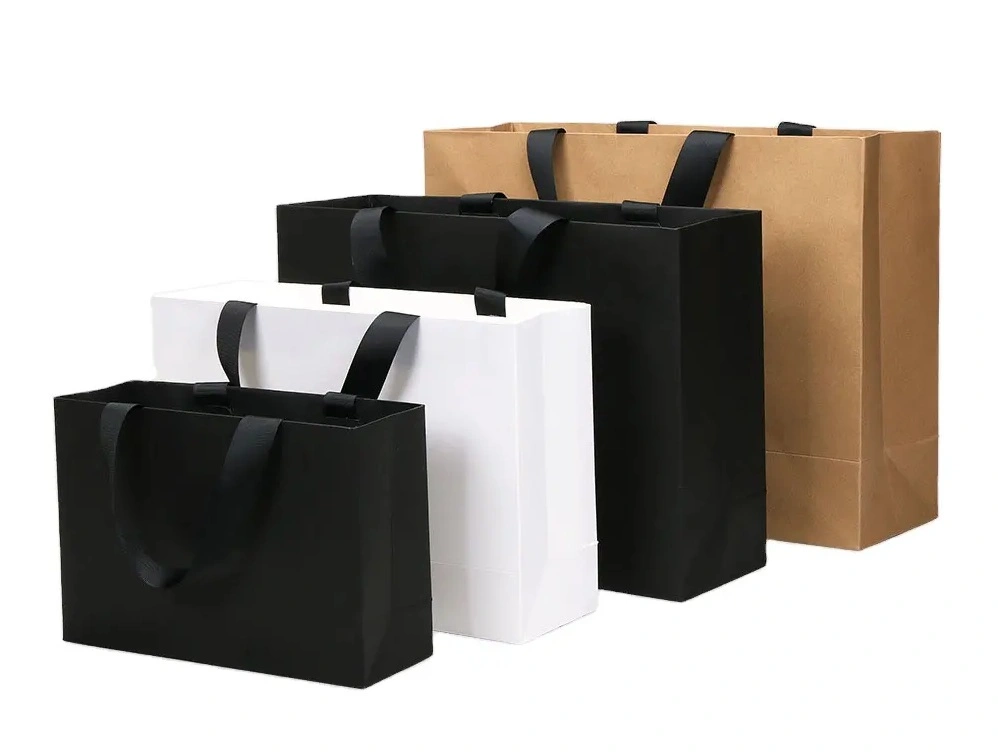
While most brands customize bag sizes based on their products, knowing standard ranges helps streamline decision-making and reduce communication back-and-forth.
Small Bags (Width 10–18 cm):
Ideal for jewelry, small accessories, perfumes, and mini gift boxes. Commonly used in premium sectors for their compact, delicate appearance.
Medium Bags (Width 20–28 cm):
The most frequently used size, suitable for beauty gift sets, skincare sets, lightweight clothing (like T-shirts and scarves), and small rigid boxes. These bags are versatile, capable of being either structured or lightweight.
Large Bags (Width 30–45 cm):
Used for shoe boxes, coats, sweaters, large gift boxes, or multi-product sets. These require higher paper weight, sturdy handles, and reinforced folds to prevent deformation.
Extra-Large Bags (Width 50 cm+):
Custom-made for full clothing sets, large home goods, high-end gift sets, or multiple boxes. They require reinforced bottoms and handles to ensure stability and durability.
4. Choosing Size Based on Product Type
When choosing a paper bag size, different product types require different design considerations. Even with similar dimensions, variations in structure, weight, and placement can affect the final fit. Below are practical guidelines by product category to help you avoid sizing mistakes.
Rigid boxes (gift boxes)
These are the most common source of size errors. Because rigid boxes often include thick boards, magnetic closures, or layered structures, the bag must allow extra space. The bag width should be 1.5–2 cm wider than the box, the height 3–4 cm higher, and the gusset at least 1 cm thicker than the box. For magnetic or extra-thick boxes, always leave space for the fold lines to prevent bulging.
Clothing and fabric products
Since apparel is compressible, sizing is more flexible, but the folded thickness is key. Light items like T-shirts or scarves fit easily, while bulky items such as sweaters or coats require a wider gusset to avoid puffing. Bag height should not be too tall to prevent collapse. Common practical sizes include 28×10×38 cm and 32×12×42 cm.
Food, bakery, and coffee products
A common mistake is focusing only on weight and ignoring bottom width. Bakery items usually need a wide base to fit trays or boxes. Coffee beans are heavy, so thicker paper (≥200g) is recommended, and the opening must be wide enough for smooth loading. If the food comes in a tray or box, ease of loading is more important than the exact measurement.
Wine bottles and glass bottles
These require sizing based on the widest part of the bottle—not the neck. Bags are typically narrow and tall, with reinforced double bottoms for stability. A common single-bottle size is 12×10×35 cm, suitable for most wine, fruit wine, and some craft beer bottles.
Multi-item combinations
For sets like cosmetic bundles, gift box + freebies, or multiple boxes, the key is determining the placement layout first. Horizontal and vertical arrangements require different gusset widths. If the combination includes several items, increase the gusset to avoid compression. Providing a placement diagram to your supplier greatly improves accuracy and reduces the need for revisions.
5. Importance of Gusset (Side Width)
The gusset of a paper bag may seem like just a “thickness” measurement, but its importance is often underestimated. The gusset directly determines whether the bag’s structure is stable and how it looks once the product is placed inside. A well-designed gusset makes the bag look firm and structured, while a gusset that is too narrow or too wide can cause noticeable issues.
When the gusset is too narrow, the product will push against the sides, causing the bag to bulge or deform, making it look uneven and unrefined. A bag that appears “collapsed” can also make the product look cheap and the packaging less presentable. For heavier items—such as gift boxes, food packaging, or glass products—an insufficient gusset also reduces load-bearing capacity, increasing the risk of glue separation or distortion when carried.
On the other hand, a gusset that is too wide creates the opposite problem: the product appears to “float” inside the bag with too much empty space. This makes the bag look unbalanced and awkward to carry. Additionally, an oversized gusset increases material usage, which raises production costs—especially noticeable in bulk orders.
To match different product types, certain gusset ranges are generally recommended. Small items like jewelry boxes or accessories typically work well with a 6–8 cm gusset. Standard gift boxes usually fit best with 8–12 cm, while larger gift boxes, apparel, or outerwear often require 12–16 cm to maintain structure and ensure smooth loading.
The overall principle is simple and practical:
Gusset width = product thickness + 1–2 cm of allowance.
This extra space not only makes loading easier but also keeps the bag firm and well-shaped, resulting in a more professional and premium presentation.
6. Paper Weight and Size Compatibility
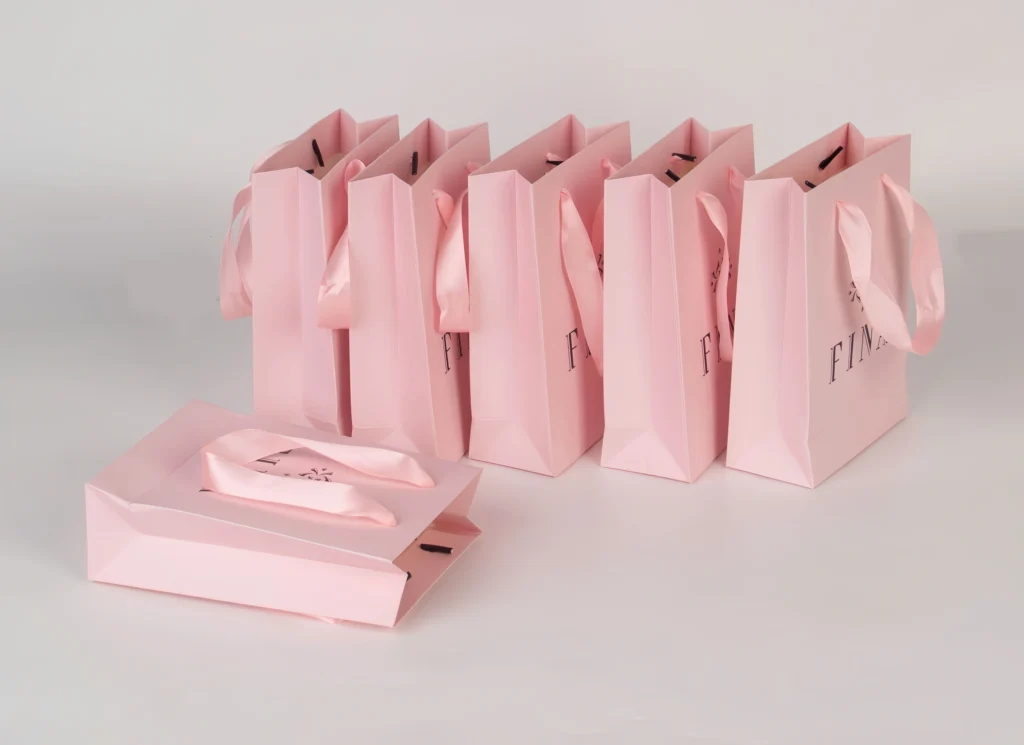
Choosing the right paper weight ensures the bag keeps its shape, supports the product’s weight, and looks professional. Different materials—white card, black card, kraft paper, coated paper, and specialty papers—offer varying stiffness, so paper weight must match the bag’s size and use.
1)Small Bags — 170–190g
Ideal for lightweight items such as accessories, small cosmetics, and jewelry boxes.
This range provides enough stiffness while keeping the bag light and cost-efficient.
2)Medium Bags — 210–230g
Suitable for clothing, skincare sets, and medium gift boxes.
This thickness offers good structure, better load-bearing, and a more premium appearance.
3)Large / Heavy Bags — 250–350g + Reinforcement
Recommended for heavy products like wine, shoe boxes, and large gift sets.
Thicker paper provides strength and stability, and the bottom should be reinforced to prevent sagging or tearing.
4)Paper Thickness Affects Internal Space
Thicker paper creates thicker folds—typically 2–3 mm—which reduces the bag’s internal space.
If not included in size planning, products may fit on paper but not fit in actual use, especially rigid boxes.
7. How Handle Type Affects Bag Size
The handle style of a paper bag is often viewed as merely a “decorative element,” but in reality, it affects far more than visual appearance. It plays a key role in weight-bearing capacity and also determines the usable height at the top of the bag. Different handle materials change the thickness of the bag opening, the hand feel, and the overall aesthetic, and choosing the wrong type can directly impact both the bag’s size design and the user experience.
Common handle options include cotton rope, polyester ribbon, paper rope, T-shaped handles, and die-cut handles, each suited for different scenarios. For heavier or more rigid products—such as wine bottles, sturdy gift boxes, or premium gift sets—strong cotton rope handles are ideal. Paired with reinforced top cardboards, they improve durability and ensure the bag remains comfortable to carry and resistant to deformation.
Fashion brands and beauty companies often prioritize tactile comfort and a refined look. They typically prefer satin or polyester ribbons. These soft, elegant materials enhance the luxury feel when combined with a well-structured paper bag, making them the most popular choice for apparel, cosmetics, and premium gift packaging.
For gift shops, cultural and creative stores, or small daily-use products, paper rope is an economical and eco-friendly option. It’s lightweight, recyclable, cost-effective, and a perfect match for sustainable packaging, while still strong enough for everyday items. Its natural and minimalistic look makes it a versatile choice.
Beyond the material itself, the thickness and length of the handles also affect the bag’s actual internal usability. Handles that are too thick occupy valuable space at the bag opening, reducing the usable height inside. Handles that are too long can disrupt visual balance and make the bag look loose or droopy. Therefore, it’s crucial to factor in the handle’s space consumption during the design phase to ensure a well-proportioned appearance and smooth practical use.
8. Common Mistakes in Choosing Bag Size
When selecting paper bag sizes, many brands tend to make several common mistakes, and these errors often directly affect both the packaging presentation and the user experience. One of the most typical issues is measuring only the product itself while ignoring the size of the outer gift box, which results in a bag that simply doesn’t fit. Another frequent problem is providing “approximate sizes” instead of accurate measurements—even a difference of 0.5 cm can make the bag unusable.
Some products are packed too tightly, especially rigid gift boxes, which may push against the creases and cause the bag to deform. On the other hand, if the bag is too large, the product will look loose inside, affecting the visual presentation and wasting materials and cost.
Another mistake is choosing paper bags that are too thin for heavier products, increasing the risk of the bottom sagging or the handles breaking. Additionally, height selection is often overlooked—especially for apparel packaging. If the bag is too tall, it may not stand well, leaning to one side and greatly reducing the overall display effect.
Therefore, when determining the size of a paper bag, it’s essential to consider the product’s outer packaging, take precise measurements, select appropriate paper weight, and choose the right bag structure in order to achieve a result that is both visually appealing and practical.
9. Conclusion
Choosing the right paper bag size seems simple but involves many details. Consider product volume, shape, packaging, inserts, usage scenario, weight, paper weight, and handle type.
Providing accurate product dimensions, usage, and weight to a professional supplier allows them to offer the most suitable solution—resulting in attractive, durable paper bags that enhance brand perception while minimizing waste and cost.